
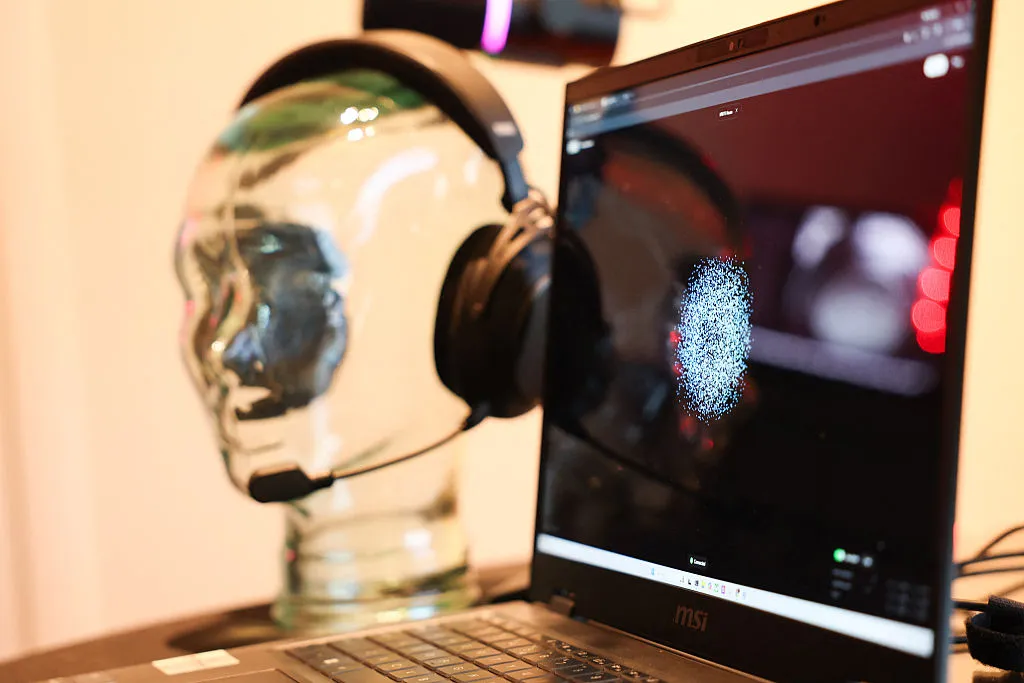
🌐 CONTEXT & BACKGROUND
In the rapidly evolving landscape of technology, the emergence of brain-computer interface (BCI) technology is not just a breakthrough — it’s a paradigm shift. Entrepreneurs need to pay attention as this innovative tech offers groundbreaking solutions in product development and user engagement. With firms like Neurable spearheading the charge towards commercializing BCI, this technology promises to redefine how we interact with devices by tapping directly into our cognitive functions.
Historically, BCI technology has journeyed from the pages of science fiction to the forefront of consumer technology. Originally developed to help restore function to paralyzed individuals, BCI faced significant limitations due to invasive methods that required surgical intervention. Before this paradigm shift, market players were primarily focused on invasive BCI methods, which limited consumer applications. The market was characterized by skepticism and niche applications, with widespread public adoption appearing unrealistic. Now, with the advent of non-invasive BCI offered by companies like Neurable, we are entering an era where the potential applications are excitingly broadened, spanning health, gaming, and even workspace productivity.
📊 MARKET IMPACT ANALYSIS
The announcement from Neurable marks a pivotal moment in the BCI tech landscape, generating a ripple effect across various sectors. The winners here are the companies that can effectively integrate and commercialize BCI technology. Neurable itself stands to gain exponentially by licensing its cutting-edge “mind-reading” technology, positioning itself as a go-to partner for OEMs (original equipment manufacturers) looking to exploit this new frontier.
On the flip side, companies that fail to adapt in this burgeoning market could risk obsolescence. Industries such as health tech, fitness equipment, gaming, and productivity software stand to be significantly disrupted. As Neurable opens the floodgates for BCI technology to be incorporated into consumer wearables, businesses that cling to traditional user interface models could find themselves lagging behind. Financial opportunities abound for those who can integrate real-time cognitive feedback into their products, creating richer, personalized user experiences.
⚔️ COMPETITIVE COMPARISON
Neurable’s non-invasive BCI technology sets itself apart from competitors like Neuralink, which focuses on invasive methods. Neurable’s model leverages EEG sensors and proprietary signal processing — technologies that have progressed significantly over recent years. Comparatively, traditional BCI models have been marred by complexity, the need for surgical intervention, and privacy concerns regarding neural data. Neurable has effectively eliminated these barriers by offering a straightforward, user-friendly alternative.
Additionally, Neurable’s integration model allows third-party companies to seamlessly embed its technology within their existing hardware. This is in stark contrast to competitors who focus on entirely proprietary devices. The technical benchmarks — encompassing data accuracy, response time, and user comfort — highlight Neurable’s potential to deliver significant advantages over traditional BCI systems, and even some new entrants that still rely on outdated methodologies.
🛠️ REAL-WORLD USE CASES & MONETIZATION
For startups and solo hustlers, the licensing of BCI technology offers immediate monetization opportunities. Consider the following workflow ideas:
- ⚡ **Integrated Gaming Gear**: Develop gaming headsets that utilize BCI technology to adjust in-game difficulty and provide instant feedback on player concentration and focus levels.
- ⚡ **Fitness Wearables**: Create fitness trackers that assess mental state alongside physical metrics, offering insights into how mental wellness affects performance and recovery.
- ⚡ **Productivity Tools**: Launch productivity apps that adapt workflows based on cognitive performance metrics, enabling users to optimize their task management in real-time.
📈 DATA & TRENDS
The BCI market is projected to experience explosive growth over the next several years. Current estimates suggest a compound annual growth rate (CAGR) of over 38% from 2023 to 2026. Investment in BCI technology alone is expected to surpass $1 billion in the coming years, as major players recognize the lucrative potential in consumer and enterprise applications.
User adoption trends are equally impressive, with surveys indicating that approximately 60% of consumers express interest in integrating BCI technologies into their daily lives. This evolving consumer expectation reflects a broader trend towards personalized, cognition-friendly technologies that aim to enhance productivity and well-being.
🧠 HUSTLEBOTICS EDITORIAL INSIGHT
Based on our analysis at HustleBotics, the implications of Neurable’s recent announcement are profound. The future of technology appears poised for a radical transformation with the integration of cognitive data into everyday consumer products. As companies recognize the potential of truly human-centric interfaces, we are likely to see a surge in investment and innovation across the BCI landscape. Entrepreneurs who capitalize on this wave will not only gain a competitive advantage but could redefine consumer relationships with technology.
🔮 FUTURE PREDICTIONS
Looking forward to the next six months, we anticipate an influx of collaborations between Neurable and various sectors, propelling BCI technology into mainstream consumer products. Within two years, BCI could become a staple in wearables; the analogy of heart rate sensors could very well become a reality for brain data. This isn’t merely hype — this technological leap marks a significant pivot point for the entire industry, one that will usher in a new era of interaction between humans and machines.
❓ FAQ SECTION (SEO Booster)
What is brain-computer interface (BCI) technology?
Brain-computer interface (BCI) technology enables direct communication between the brain and external devices, allowing users to control technology using neural signals.
How does Neurable’s non-invasive BCI technology work?
Neurable’s technology uses EEG sensors to capture neural activity, which is then processed using proprietary algorithms to interpret cognitive performance without the need for surgical intervention.
Can I license Neurable’s BCI technology for my products?
Yes, Neurable is actively seeking to license its technology for integration into various consumer-facing products, enabling companies to access its innovative capabilities.
What privacy measures does Neurable take with user data?
Neurable ensures user data is anonymized and protected, adhering to stringent privacy standards, including HIPAA, to guarantee data safety.
How can startups monetize BCI technology immediately?
Startups can quickly monetize BCI technology by creating gaming gear, fitness trackers, or productivity applications that leverage cognitive data to enhance user experience and performance.






Best platform I have encountered in a long time. The bonuses are generous and the support team is very helpful. Log in to brazino777entrar now
Such a fun way to spend my free time. The games are fair and the rewards keep me coming back for more. Go check out 6jiligames now.
Best platform for those who love fast paced action. Everything from registration to playing is very intuitive. I’m really enjoying my time at pkwc888 right now.
The registration process was a breeze and I was playing within minutes. Very professional setup over at phdremph.
The JILI slots here are just hitting different today! I managed to get a decent win and the process of claiming it was very straightforward. ph877jili is the way to go.
Feeling lucky today! Just won a big prize and the process to claim it was effortless. Big thanks to kr7luckcasino for the great service.