
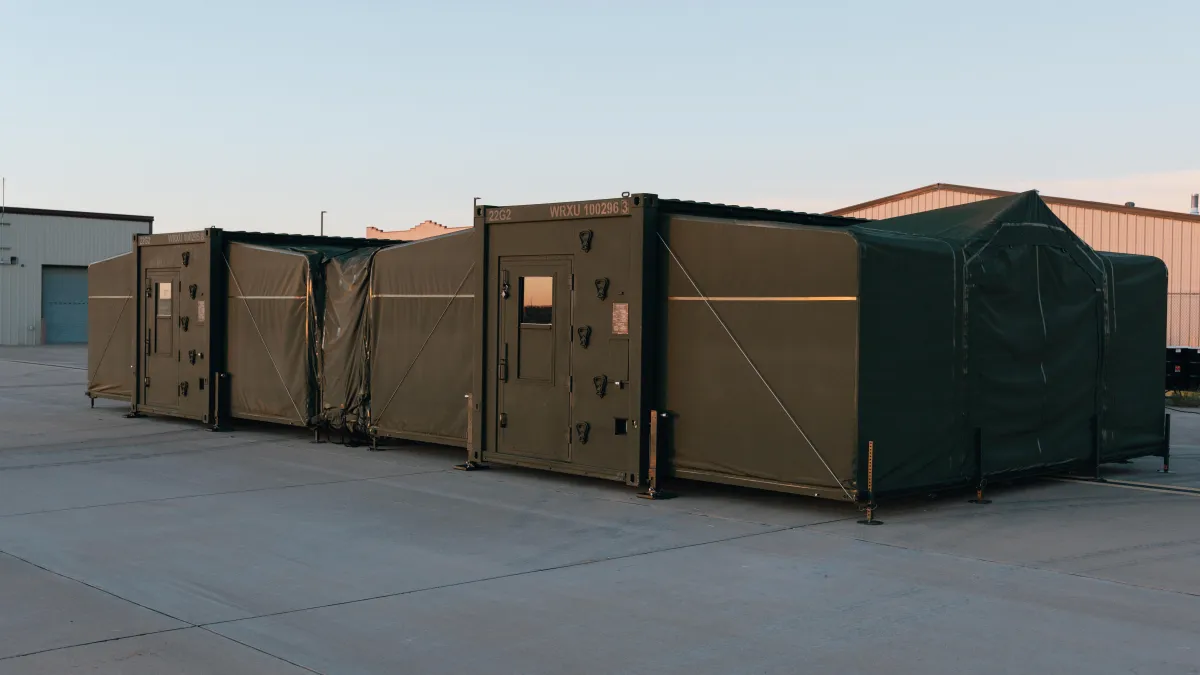
Transforming the Landscape of Defense Manufacturing: Firestorm Labs’ Revolutionary Drone Production Technology
For entrepreneurs and business innovators, understanding the shifts in manufacturing technologies, especially in defense, can unlock transformative opportunities. Firestorm Labs introduces a novel solution—a drone factory that fits inside a shipping container, spurring an evolution in how military capabilities are deployed near conflict zones.
🌐 CONTEXT & BACKGROUND
The impetus behind Firestorm Labs’ innovation lies in a pressing need for on-the-ground manufacturing capabilities in conflict scenarios. Traditional supply chains are vulnerable; equipment needs to be close to the front lines. Before this innovation, military forces relied heavily on distant factories, exposing themselves to logistical challenges and delays in critical situations.
Founded by defense pioneers and helmed by a seasoned CEO Dan Magy, Firestorm Labs initially specialized in drone manufacturing. However, as the complexities of modern warfare became evident, so did the necessity for more agile solutions. The company’s pivot into containerized manufacturing arose from direct feedback from military stakeholders who wanted drone production closer to operational theaters.
📊 MARKET IMPACT ANALYSIS
With the recent $82 million funding boost, Firestorm Labs is positioned as a major disruptor in the defense sector. The winners in this ongoing shift include rapid response units and military operational commands that benefit from on-the-spot drone manufacturing capabilities. The losers, however, are traditional fixed manufacturing sites, which may face obsolescence as military logistics evolve.
This innovative approach will likely redefine military logistics across several industries, including aerospace and defense contracting. It’s a clear signal for startups and existing companies to pivot towards technology that emphasizes speed and efficiency, particularly in contexts of heightened tension. The financial opportunities are vast, from government contracts to commercial partnerships in the defense sector.
⚔️ COMPETITIVE COMPARISON
When compared to traditional manufacturing methods, Firestorm’s xCell platform offers unparalleled rapid manufacturing capabilities. Established companies in the drone space have long relied on static manufacturing sites, exposing their operations to vulnerabilities and delays. However, xCell can produce operational drone units in under 24 hours, fundamentally changing the dynamic of military readiness.
Firestorm Labs holds an exclusive five-year partnership with HP for using its industrial-grade 3D printing technology, giving it a crucial advantage over competitors who may lag in terms of agile manufacturing capabilities. This strategic collaboration enhances their competitive edge and enables bespoke manufacturing suited to the fluid tactics of modern warfare.
🛠️ REAL-WORLD USE CASES & MONETIZATION
Innovators and entrepreneurs can seize the numerous monetization opportunities arising from Firestorm’s tech. Here are three specific workflow ideas:
- ⚡ **Rapid Prototype Development**: Utilize the xCell platform to offer rapid drone prototyping services to various defense contractors, enabling them to accelerate product development timelines.
- ⚡ **Custom Drone Configurations**: Create specialized configurations for surveillance, reconnaissance, or electronic warfare. By developing custom packages, startups can appeal to different military branches looking for specialized drones.
- ⚡ **Parts Manufacturing Service**: Leverage xCell to manufacture vital replacement parts for other military equipment on-site, addressing critical supply chain bottlenecks and generating additional revenue streams.
📈 DATA & TRENDS
The defense manufacturing sector is projected to witness explosive growth. Investment in military technology is expected to reach $721 billion by 2026, marking a CAGR of approximately 4.3%. Additionally, the adoption of advanced manufacturing techniques, such as 3D printing, will continue to rise, attracting significant interest from various industrial players.
Moreover, with the increasing focus on mobile and agile manufacturing solutions, industries are beginning to shift their strategies towards adopting on-site production methods, streamlining operations in high-stakes environments.
🧠 HUSTLEBOTICS EDITORIAL INSIGHT
Based on our analysis at HustleBotics, the implications of Firestorm Labs’ innovation extend far beyond defense. This pivot towards portable manufacturing technologies symbolizes a critical evolution in supply chain logistics across numerous sectors. As the lines blur between technology and logistics, entrepreneurs and startups must adapt to these changes to carve out their competitive advantage.
🔮 FUTURE PREDICTIONS
Looking ahead, we anticipate significant developments within the next six months as Firestorm Labs ramps up its operational capabilities in the Indo-Pacific. In two years, the market will evolve further, solidifying these containerized manufacturing units as the new norm. This advancement is not merely a passing trend; it represents a pivotal point for the entire manufacturing industry.
❓ FAQ SECTION (SEO Booster)
What is Firestorm Labs’ xCell platform?
Firestorm Labs’ xCell is a containerized manufacturing solution that enables the rapid production of drone systems, allowing military forces to manufacture operational units on-site within hours.
How does this technology impact military logistics?
By localizing drone manufacturing closer to conflict zones, Firestorm Labs minimizes the vulnerabilities associated with traditional supply chains, ensuring that military units can quickly adapt and deploy necessary technologies.
Can startups monetize Firestorm’s technology?
Yes, startups can explore several monetization avenues, including rapid prototyping, custom drone configurations, and on-site replacement parts manufacturing to meet the evolving needs of defense contractors.
How will Firestorm affect traditional defense manufacturers?
Traditional defense manufacturers reliant on fixed sites may face significant challenges as portable manufacturing solutions like Firestorm’s xCell industry redefines logistical capabilities and operational readiness.
What does the future hold for drone technology in defense?
The future of drone technology in defense looks promising, with continuous advancements in rapid manufacturing, customization, and logistics that are expected to elevate military operations beyond conventional methods.







The graphics are stunning and the gameplay is very immersive. I spent hours here and didn’t even notice the time passing. I love inyyycasino so much.