Unlocking New Frontiers in AI Innovation
In a bold move that could reshape the landscape of artificial intelligence, Flapping Airplanes has secured an impressive $180 million in seed funding from notable investors including Google Ventures, Sequoia, and Index. This funding is not just a financial endorsement; it is a clear signal of confidence in the lab’s innovative approach. The founders, Ben and Asher Spector along with Aidan Smith, are not merely aggregating existing data but are committed to developing models that emulate human learning processes. This shift from traditional data-heavy models to more data-efficient training methods could lead to significant advancements in the technology sector.
A report from the McKinsey Global Institute highlights that organizations adopting more sophisticated learning techniques could see productivity gains of up to 20-30%. This statistic underscores the potential impact of Flapping Airplanes’ research. By prioritizing creative processes over conventional methodologies, they are setting a new standard for AI development. Moreover, the implications of this approach extend beyond mere efficiency; they may also redefine the creative capabilities of AI systems, leading to applications that more closely mirror human cognition.
In a recent episode of TechCrunch’s Equity podcast, the founders discussed the rationale behind their significant funding, despite not having a product in the market yet. This commitment to research over immediate commercialization aligns with a broader industry trend where long-term innovation is favored over short-term gains. The founders emphasize that by valuing creativity and innovative thinking over traditional credentials, they are fostering an environment that encourages breakthrough ideas.
Given the rapid evolution of technology, the idea of ‘neolabs’—research facilities that prioritize innovative, human-like models—could become the new norm. This trend is echoed in a recent report by the World Economic Forum, which suggests that organizations focusing on creativity and human-centric approaches will have a competitive advantage in the coming years.
Second-Order Effects
The decision to invest heavily in a lab that focuses on human-like learning models can have profound second-order effects across various sectors. First, the educational landscape may shift as institutions begin to adapt their curricula to emphasize creativity and critical thinking, mirroring the values espoused by Flapping Airplanes. As these new learning models gain traction, educational systems may prioritize teaching methodologies that foster innovation, thereby producing a workforce better equipped to thrive in an increasingly automated world.
Moreover, the business implications are equally significant. Companies relying on traditional data aggregation methods may find themselves at a competitive disadvantage if they fail to innovate. As Flapping Airplanes’ models demonstrate the efficacy of human-like learning, businesses across sectors may feel compelled to pivot their strategies or risk obsolescence. This could lead to a wave of mergers and acquisitions, as companies seek to acquire talent and technology that align with this new paradigm.
Finally, consumer behavior may also shift. As AI systems become more adept at understanding and anticipating human needs, customer expectations will rise. Businesses will need to respond to these heightened expectations by integrating more sophisticated AI solutions, thereby further driving innovation and competition.
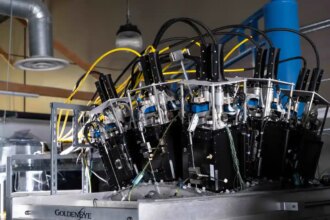
Why this visual matters: This image encapsulates the essence of Flapping Airplanes’ vision for AI innovation, emphasizing the intersection of human cognition and technology. By showcasing their approach to developing AI that learns like humans, it reinforces the significance of creative thinking in driving advancements in the industry.
Data & Competition
The competitive landscape is rapidly evolving as companies recognize the value of innovative approaches to AI. Traditional giants in the tech industry may face challenges as new entrants like Flapping Airplanes emerge with disruptive methodologies. The potential for increased efficiency and creativity in AI models could lead to a reallocation of market shares.
Winners in this scenario are likely to be those organizations that embrace change and invest in research that prioritizes human-like learning. Flapping Airplanes, with its substantial funding and innovative vision, positions itself as a frontrunner in this new wave of AI development. Conversely, established companies that cling to outdated practices risk losing relevance in a market that increasingly values adaptability and creativity.
Additionally, as new models emerge, the need for regulatory frameworks will intensify. Policymakers will need to navigate the complexities introduced by these advanced technologies to ensure ethical and responsible AI development. This creates an opportunity for consultancies and legal firms specializing in technology to carve out a niche in an evolving landscape.
Strategic Deployment Logic
Invest in research and development that emphasizes human-like learning models to stay competitive in the evolving landscape of technology.
Frequently Asked Questions
What is Flapping Airplanes and what do they aim to achieve?
Flapping Airplanes is an innovative lab focused on developing AI models that emulate human learning processes. Their goal is to create data-efficient training methods that could lead to significant advancements in artificial intelligence.
Why is their approach significant for the industry?
Their focus on human-like learning could redefine how AI is developed and applied, emphasizing creativity and efficiency over traditional data aggregation methods. This shift may lead to transformative changes across various sectors.
What are the potential second-order effects of their innovations?
Second-order effects may include shifts in educational systems, changes in consumer behavior, and increased competition among businesses to adopt innovative AI solutions. This could lead to significant market disruptions and new business opportunities.
How can businesses adapt to these changes?
Businesses should invest in research and development focused on innovative AI approaches and consider partnerships with labs like Flapping Airplanes to stay ahead of competition and evolving market demands.
Meet the Analyst
Marcus Vance, Tech Editor – With over a decade of experience in the technology sector, Marcus specializes in analyzing trends and innovations that shape the digital landscape. His insights provide valuable perspectives on the future of technology and business.
Last Updated: March 2026 | HustleBotics Editorial Team