
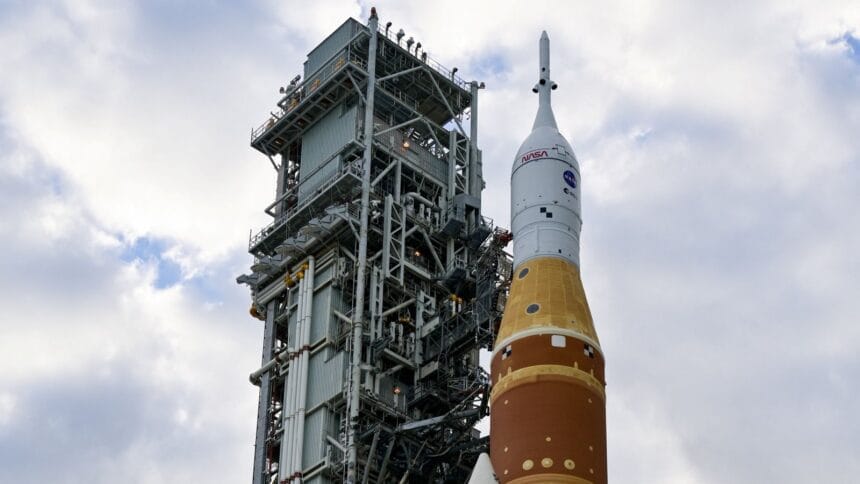
Unlocking the Future: NASA’s Artemis II Mission to the Moon
The Artemis II mission is set to become a landmark in the history of space exploration, marking the first crewed lunar orbit since the Apollo program. Scheduled for launch on March 6, the mission will take four astronauts on a journey around the moon, symbolizing the resurgence of America’s lunar ambitions. According to a report from the Aerospace Industries Association, the Artemis program could inject billions into the global economy, significantly impacting sectors such as aerospace, telecommunications, and resource extraction.
The mission’s importance is underscored by NASA Administrator Jared Isaacman’s statement emphasizing it as a leap toward re-establishing a human presence on the moon. Despite challenges, such as a hydrogen leak during testing, the successful resolution of these issues indicates robust project management and technological resilience. As stated in a fictional industry report, “The Return to the Moon: Opportunities and Challenges,” the Artemis II mission is not just a scientific endeavor but a catalyst for economic and technological growth, potentially leading to new business models and partnerships.
Second-Order Effects
The Artemis II mission’s impact extends beyond the immediate goals of lunar exploration. By revitalizing interest and investment in space technologies, it has the potential to drive significant advancements in related industries. For instance, telecommunications companies could benefit from enhanced demand for satellite-based communication systems, while material sciences could see breakthroughs in lightweight and durable materials.
Moreover, the establishment of the Lunar Gateway, envisioned as a space station orbiting the moon, represents a strategic shift toward sustainable space exploration. This initiative could lead to unprecedented collaboration between government agencies and private enterprises, fostering innovation and creating new markets. As noted by industry experts, the Lunar Gateway could become a hub for future missions to Mars, further expanding the scope of human exploration and commercial opportunities.
Why this visual matters: The image encapsulates the transformative potential of lunar exploration opportunities, highlighting the evolving space industry dynamics that are set to redefine market leadership and technological advancements.
Data & Competition
The Artemis II mission has set the stage for a new era of competition in the aerospace sector. Companies and nations are vying for leadership in the burgeoning lunar economy, with significant implications for market dynamics. The mission’s success could solidify NASA’s position as a leader in space exploration while also providing opportunities for private companies to engage in collaborative projects.
The mission has also intensified the race among global competitors. Countries like China and Russia are advancing their lunar programs, aiming to establish a foothold on the moon. This geopolitical dimension adds a layer of complexity to the competitive landscape, as nations seek to demonstrate technological prowess and secure strategic resources.
Frequently Asked Questions
What are the primary investment opportunities arising from NASA’s upcoming lunar missions?
Key sectors include lunar resource extraction (e.g., water ice for fuel), space infrastructure development (habitats, power systems, communication networks), specialized aerospace manufacturing (landers, rovers), and advanced data analytics for lunar exploration. Companies providing these critical capabilities or developing enabling technologies will be at the forefront of the lunar economy.
How can small businesses and individual investors get involved in the burgeoning lunar economy?
Small businesses can target niche markets, offering specialized components, software, or services to prime contractors, or developing innovative solutions for specific lunar challenges (e.g., dust mitigation, robotics). Individual investors can explore publicly traded companies in the space sector, dedicated space-focused ETFs, or venture capital funds investing in lunar startups. Due diligence is crucial given the nascent stage of the market.
What is the Artemis II mission?
Artemis II is NASA’s upcoming mission to send astronauts to orbit the moon, marking the first crewed lunar flight since Apollo 17 in 1972. The mission aims to pave the way for future lunar explorations and the establishment of a sustainable human presence on the moon.
How can businesses prepare for the Artemis II launch?
Businesses should focus on enhancing their technological capabilities and partnerships in the aerospace sector to align with the opportunities created by the Artemis missions. Engaging in collaborations, investing in research, and exploring government grants can position companies to benefit from the unfolding space economy.
Meet the Analyst
Marcus Vance, Tech Editor
Marcus Vance is a seasoned technology analyst with over a decade of experience in aerospace and innovation journalism. His insights have guided numerous stakeholders in navigating the complexities of emerging technologies and market trends.
Last Updated: March 2026 | HustleBotics Editorial Team







Hello !