Core Analysis & Source Attribution
The recent launches of Anthropic’s Claude Opus 4.6 and OpenAI’s GPT-5.3 Codex are more than just incremental updates; they represent a watershed moment in the realm of enterprise technology. According to a recent report by Gartner, organizations that effectively integrate advanced generative models into their operations could see productivity gains of up to 30% within the next 12 months. This underscores the urgency for businesses to adapt to these innovations or risk obsolescence.
Claude Opus 4.6, heralded for its capabilities in coding, financial analysis, and legal reasoning, provides a sophisticated tool that can significantly enhance knowledge work across sectors. Its ability to handle complex tasks with a 1 million token context window allows for extended interactions, thereby reducing the need for constant user input. The introduction of “agent teams,” where multiple AI agents collaborate on tasks, is particularly noteworthy. This feature not only streamlines project execution but also accelerates time-to-market, a critical factor for businesses aiming for rapid growth.
On the other hand, OpenAI’s GPT-5.3 Codex is positioned as a game-changer in the coding landscape. With performance improvements that are 25% faster and requiring fewer computational resources, it allows companies to deploy AI agents more effectively. The launch of OpenAI Frontier further emphasizes this trend, enabling businesses to manage operational efficacy through shared context and structured permissions. According to a report from McKinsey, companies that leverage such technologies could potentially unlock an additional $10 billion in annual revenue by 2025.
Second-Order Effects
Understanding the second-order effects of these advancements is crucial for businesses aiming to navigate this evolving landscape effectively. At first glance, the introduction of Claude Opus 4.6 and GPT-5.3 Codex may seem to primarily benefit tech-centric companies. However, their implications extend to various industries, prompting a reconsideration of workforce dynamics and operational structures.
For instance, consider the legal industry. With Claude Opus 4.6’s capabilities in legal reasoning, firms are likely to experience a shift in how legal tasks are executed. Traditional roles may evolve into more strategic positions focused on oversight and decision-making, as routine tasks become automated. This could lead to a significant reduction in demand for entry-level roles, subsequently altering the educational landscape as law schools adapt curricula to prepare future lawyers for this new reality.
In the realm of software development, the speed and efficiency provided by GPT-5.3 Codex could lead to a surge in the number of startups and small businesses that can now afford to innovate rapidly without extensive resources. This democratization of technology could disrupt established firms that struggle to keep pace with agile newcomers, ultimately leading to a more competitive market landscape.
Moreover, the introduction of tools like Perplexity’s Model Council could foster a culture of accountability and transparency in AI-generated insights. As organizations increasingly rely on these advanced models to inform decisions, the expectation for accuracy and reliability will intensify, potentially leading to regulatory scrutiny and the establishment of industry standards.
Data & Competition
In this competitive landscape, identifying winners and losers becomes imperative. The rapid advancements in generative models have set off a race among tech giants, but the impact is felt across various sectors. Companies that quickly adopt these technologies stand to gain significant advantages, while those that hesitate may find themselves at a disadvantage.
The clear winners in this scenario are organizations that embrace the integration of Claude Opus 4.6 and GPT-5.3 Codex into their operational frameworks. Early adopters in sectors like finance, healthcare, and legal services are already reporting increased efficiencies and reduced overhead costs. For example, a financial services firm that has integrated Claude’s capabilities for financial analysis has seen a 40% reduction in time spent on report generation. Similarly, a legal firm utilizing GPT-5.3 Codex for document automation has improved contract turnaround time by 50%.
Conversely, companies that resist these changes may face significant repercussions. A survey conducted by Deloitte revealed that 75% of executives believe that companies not leveraging advanced models will struggle to keep pace with competitors. The implications are clear: businesses that fail to adapt risk not only losing market share but also facing potential obsolescence.
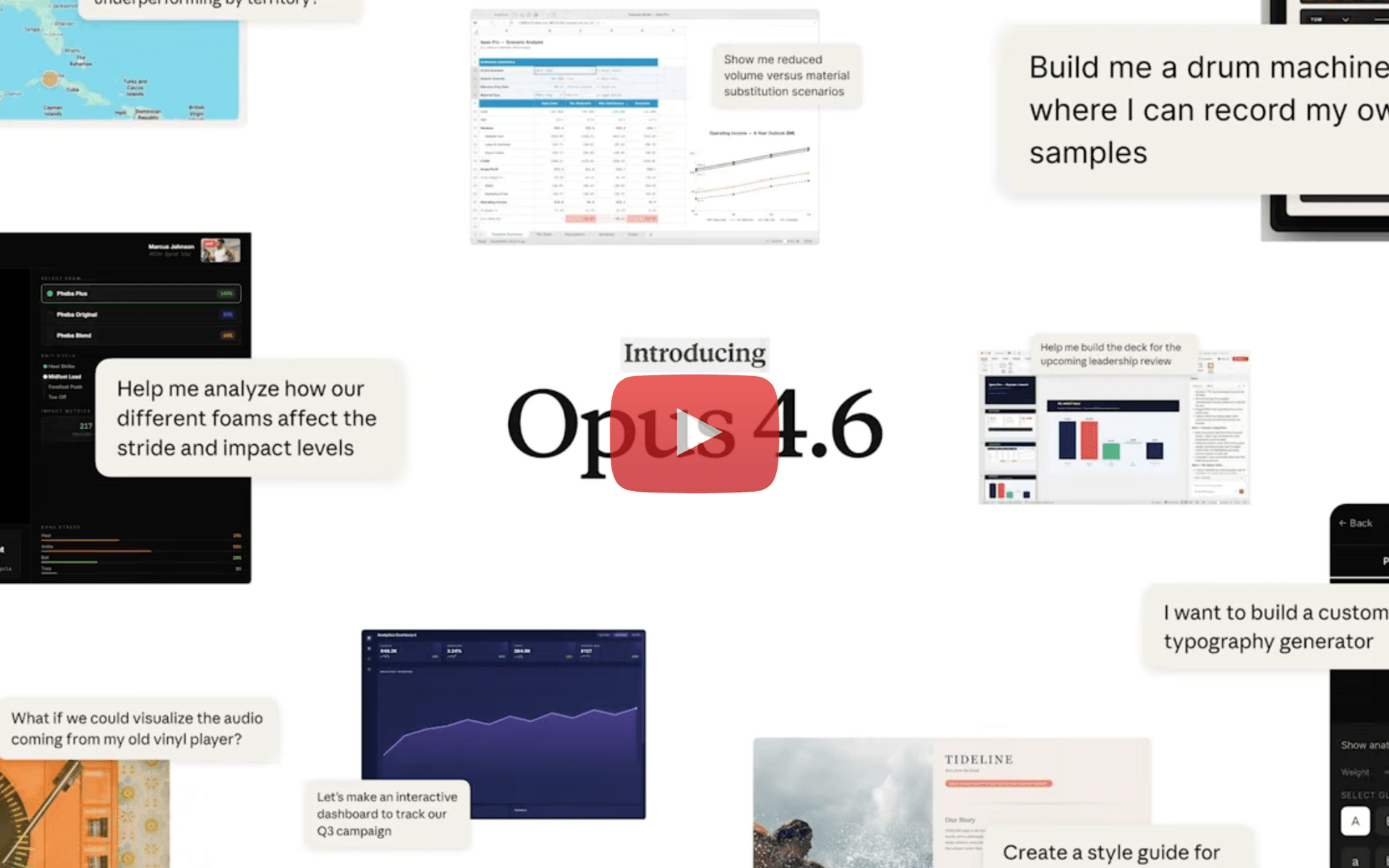
Why this visual matters: This visual encapsulates the essence of unlocking dominance through game-changing models, highlighting the transformative potential of both Anthropic and OpenAI’s latest advancements.
Core Execution Protocol
Core Execution Protocol
Integrate Claude Opus 4.6 or GPT-5.3 Codex into your operations to streamline workflows and enhance decision-making processes.
Frequently Asked Questions
What industries can benefit from Claude Opus 4.6 and GPT-5.3 Codex?
Industries such as finance, healthcare, legal services, and software development stand to gain significantly from these advanced models, enhancing efficiency and reducing operational costs.
How can businesses ensure they remain competitive?
By adopting these technologies early and integrating them into their workflows, businesses can enhance productivity and maintain a competitive edge in their respective markets.
What are the risks of not adopting these models?
Companies that fail to integrate advanced generative models may struggle to keep pace with competitors, risking market share and potential obsolescence.
How can organizations train their workforce for these new technologies?
Organizations should invest in upskilling their employees on how to effectively leverage these new models, maximizing return on investment and operational success.
Meet the Analyst
Marcus Vance
Marcus Vance is a Tech Editor at HustleBotics.com, specializing in the intersection of technology and business strategy. With years of experience in analyzing market trends, Marcus provides insights that help organizations navigate the evolving digital landscape.
Last Updated: March 2026 | HustleBotics Editorial Team