Disclosure: Some links on this page are affiliate links, meaning we may receive a commission if you click
A few years ago, Selina Tobaccowala’s daughter began placing Post-it notes around their home, urging everyone to “turn off the lights” and engage in similar sustainability efforts.
At that time, Tobaccowala had recently sold her startup, Gixo, to OpenFit and was in pursuit of her next challenge. “I observed my children and thought, ‘Let’s explore whether there’s an opportunity in the sustainability and climate space,'” she shared with TechCrunch. “There must be more we can do beyond just turning off the lights.”
Despite lacking a background in climate science or hardware engineering, she sought a familiar avenue to embark upon: surveys.
“Drawing from my passion for surveys, I conducted extensive research—an extensive amount—of consumer feedback,” recalled Tobaccowala, who previously served as President and CTO of SurveyMonkey.
Her findings indicated that many individuals were struggling to find effective ways to reduce their utility bills.
“In conversations with consumers, a recurring theme emerged: they often received notifications indicating, ‘You are spending more than your neighbors,’” she explained. “But they felt uncertain about how to address the situation.”
In response, Tobaccowala co-founded HomeBoost, a company aimed at empowering individuals to conduct their own home energy assessments. The venture was selected as one of the Startup Battlefield 200 at Disrupt 2025.
Event
|
June 23, 2026
Image Credits: HomeBoost
The assessment process at HomeBoost begins with the delivery of a BoostBox: a compact kit containing an infrared camera, a blacklight, and a link to an instructional app. As users navigate through their homes, the infrared camera identifies areas where cold or hot air is entering; the blacklight highlights lights that may need upgrading.
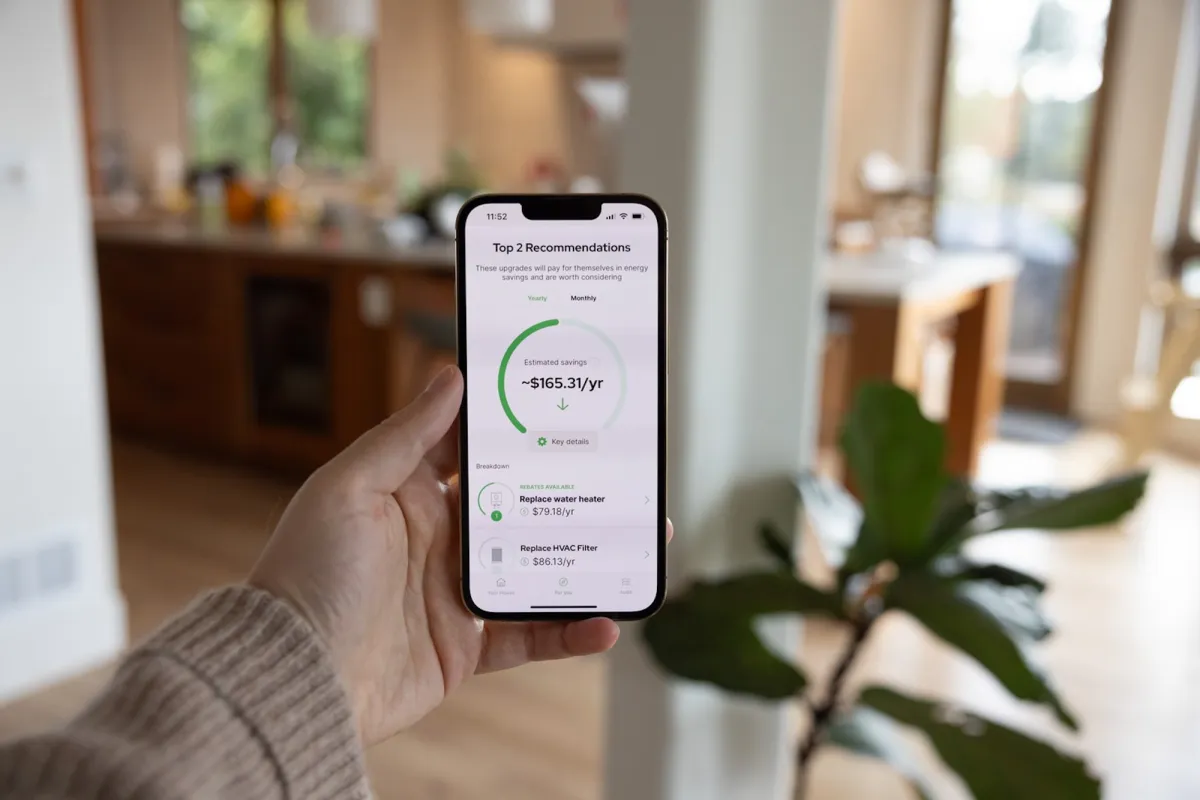
Leveraging the data collected, the app automatically generates a report that recommends the most cost-effective improvements, including potential rebates based on the user’s location.
In many regions, utility companies provide similar services. These companies, motivated to decrease energy consumption among users, often collaborate with energy auditors to assess households for efficiency improvements. However, Tobaccowala noted that the quality of these services can vary significantly.
“We spoke to numerous consumers who had undergone home energy assessments, and many felt the experience was more about upselling an upgraded HVAC system than offering true assistance,” she remarked.
The HomeBoost app is a more affordable and rapid alternative compared to traditional auditing methods, enabling users to take control of the assessment process themselves, according to Tobaccowala.
HomeBoost charges a fee of $99, roughly a quarter of the price of conventional in-person assessments. The startup is also partnering with utility companies that subsidize all or part of the costs for customers. For instance, Omaha Public Power District covers all but $19 of the charge, whereas Central Hudson will entirely fund the cost if homeowners borrow the BoostBox from a public library.
However, not every homeowner wishes to take on the surveying process independently, and not all auditors are overly sales-oriented. Dedicated auditors may spend between two to ten hours evaluating homes, compiling data, and preparing reports. To address this, HomeBoost is developing a professional version of its app, empowering auditors to serve a larger client base.
Additionally, the company is piloting a feature that connects homeowners with contractors who can execute the recommended upgrades outlined in the report. This collaboration presents contractors with new business opportunities and allows them to gather essential project information before visiting the home.
By uniting consumers, utilities, and contractors, Tobaccowala envisions that HomeBoost can make significant strides in addressing climate concerns. “It is a unique scenario where all parties are aligned to effectively lower utility bills, which ultimately contributes to climate improvement,” she stated.