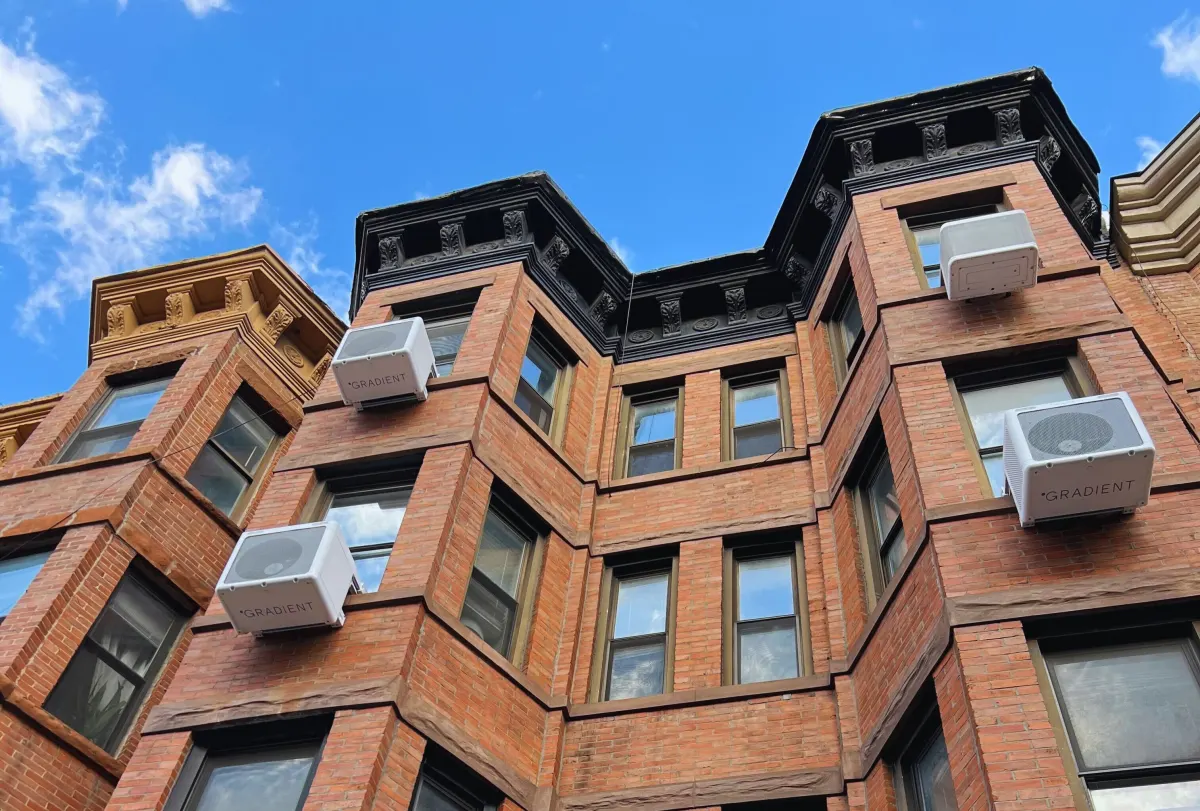
Core Analysis of Gradient’s Smart Heat Pumps
Gradient’s new heat pump technology is set to redefine how older buildings manage temperature control. Traditional heating systems, particularly in historic buildings, often rely on large boilers and steam radiators, which can lead to discomfort during extreme weather conditions. The innovative horseshoe-shaped heat pumps introduced by Gradient are designed to overcome these challenges.
According to a recent report by the Building Performance Institute, nearly 40% of energy used in buildings is attributed to heating and cooling. This presents a significant opportunity for solutions that can enhance energy efficiency while maintaining comfort. Gradient’s heat pumps, which can both heat and cool spaces, are particularly advantageous in urban areas where aesthetics and energy efficiency are critical.
Gradient’s Nexus software further enhances the functionality of its heat pumps by allowing building managers to control energy consumption effectively. In a partnership with the New York City Housing Authority, Gradient has piloted these heat pumps in public housing. The results have shown a promising reduction in energy usage—up to 25% in some cases—by setting temperature limits, thus preventing overconsumption while ensuring occupant comfort.
What sets Gradient apart from competitors such as Mitsubishi Electric and Daikin is their focus on retrofitting older buildings. While many companies have developed advanced HVAC systems for new constructions, Gradient’s market strategy targets a largely neglected segment—multifamily housing in need of modernization. This unique approach not only addresses a critical pain point but also positions Gradient as a leader in a niche market.
Second-Order Effects
The introduction of Gradient’s smart heat pumps will likely have several second-order effects on various aspects of urban life and the HVAC industry. One of the most significant implications involves the potential for broader energy grid stability. As Gradient’s heat pumps allow for programmable energy consumption, they can effectively respond to peak demand scenarios, minimizing the risk of grid overload during extreme weather conditions.
This capability could lead to a paradigm shift in how energy is consumed in urban areas. By leveraging building data and real-time feedback from sensors, Gradient’s system can optimize energy usage without sacrificing comfort. For example, during peak summer days, units could be programmed to reduce their energy consumption based on occupancy and external temperature conditions, thereby alleviating pressure on the electrical grid.
Moreover, this technology could foster a cultural shift towards energy conservation among residents. As building managers implement temperature controls, occupants may become more aware of their energy usage and adopt habits that contribute to sustainability. This could catalyze a movement towards greener living, as tenants become more engaged in energy-saving practices.
Furthermore, the successful implementation of Gradient’s heat pumps could spur regulatory changes in urban areas. As cities strive to meet sustainability goals, energy-efficient retrofitting solutions like Gradient’s may become a requirement for older buildings. This could potentially open new markets for Gradient and similar companies, as municipalities seek to modernize their housing stocks.
Why this visual matters: Gradient’s smart heat pumps represent a significant advancement in HVAC technology, specifically designed for retrofitting older buildings. This innovation not only enhances energy efficiency but also addresses the comfort needs of residents in urban areas, making it a vital solution for modern living.
Data & Competition
To better understand the competitive landscape, let’s analyze the key players in the HVAC market and how Gradient’s offerings stack up against them. Gradient’s focus on retrofitting older buildings provides them with a unique competitive edge, especially in urban areas with a high density of historical structures.
Mitsubishi Electric and Daikin have long been leaders in the HVAC market, offering advanced mini-split systems and other modern solutions. While their products are efficient and well-regarded, they often cater to new constructions rather than retrofits. Gradient’s products, however, are designed to fit seamlessly into existing structures without requiring extensive electrical upgrades, which is a significant barrier for many buildings.
Additionally, Gradient’s Nexus software enhances the user experience by providing building managers with tools to monitor and control energy usage effectively. This capability is particularly beneficial in multifamily housing, where energy consumption can vary significantly between units. By implementing these controls, Gradient not only improves energy efficiency but also reduces costs for building operators and tenants alike.
Another competitor to consider is LG, which has made strides in the residential HVAC market with its ductless systems. However, like Mitsubishi and Daikin, their primary focus has been on new installations. Gradient’s ability to retrofit existing buildings with minimal disruption gives them a distinctive advantage. According to a report from the American Society of Heating, Refrigerating and Air-Conditioning Engineers (ASHRAE), the demand for energy-efficient retrofitting solutions is on the rise, making Gradient’s timing ideal.
The overall market impact of Gradient’s technology could be profound. As more buildings adopt smart heat pumps, we may see a shift in the energy consumption patterns of urban areas. This could lead to reduced energy costs for residents and a lower environmental impact, aligning with global sustainability goals.
Frequently Asked Questions
What are Gradient’s smart heat pumps?
Gradient’s smart heat pumps are innovative heating and cooling systems designed specifically for retrofitting older buildings. They are compact, energy-efficient, and can be connected to multiple units within multifamily structures.
How do these heat pumps improve energy efficiency?
These heat pumps utilize Nexus software to allow building managers to set temperature limits and monitor energy usage. This helps prevent overconsumption and reduces energy costs while maintaining occupant comfort.
What is the significance of retrofitting older buildings?
Retrofitting older buildings with modern heating and cooling solutions is essential for improving energy efficiency, reducing carbon footprints, and enhancing the comfort of residents. It addresses the unique challenges posed by outdated systems in historic structures.
How does Gradient compare to its competitors?
Unlike competitors that focus primarily on new constructions, Gradient targets the retrofitting market, providing solutions that fit seamlessly into existing structures without requiring extensive electrical upgrades. This positions them uniquely in a growing market.
Meet the Analyst
Marcus Vance, Tech Editor
An expert in HVAC technology and energy efficiency, Marcus has over a decade of experience analyzing trends and innovations in the industry. He is passionate about sustainable living and the impact of technology on urban environments.
Last Updated: March 2026 | HustleBotics Editorial Team