
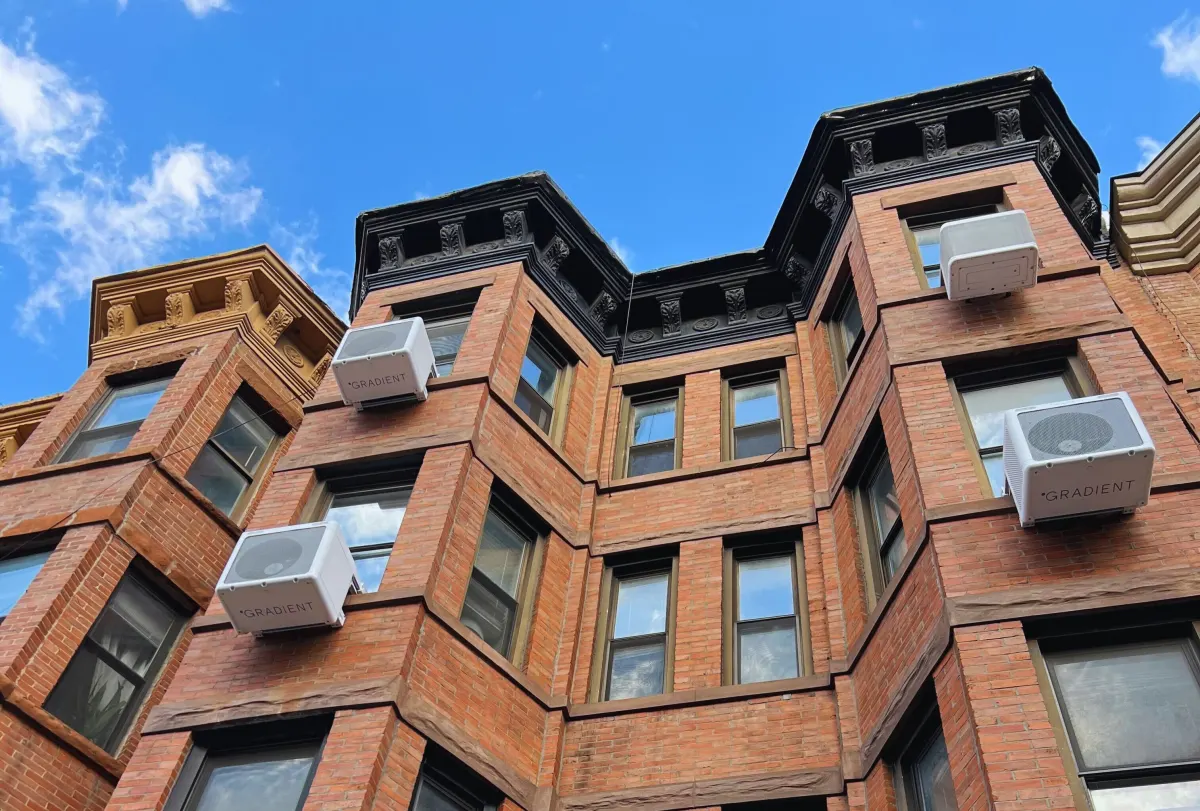
New York City, along with similar urban areas, is home to numerous historic buildings that, while architecturally charming, often lack modern comfort. Constructed during a time when large boilers were the pinnacle of technology, these structures typically experience extreme temperatures—either excessively hot or cold—but rarely achieve a balanced climate.
To address this issue, several companies are developing innovative horseshoe-shaped heat pumps. These devices, resembling window air conditioning units in appearance, do not obstruct views and possess the ability to both heat and cool spaces.
Gradient, a key player in this sector, is enhancing its heat pump system with a unique feature: the ability to connect multiple units in multifamily buildings. The startup recently shared exclusive insights regarding its new Nexus software and service with TechCrunch.
“The multifamily housing sector has been largely overlooked,” stated Vince Romanin, Chief Technology Officer of Gradient, during an interview with TechCrunch. “This is an area where we can significantly improve user experience.”
Gradient is primarily focusing on older buildings in need of HVAC upgrades. The company has partnered with the New York City Housing Authority to implement its heat pumps in public housing, and has conducted a pilot program in a two-story affordable housing complex in Tracy, California. Additionally, discussions are underway with colleges and universities, many of which operate dormitories that were not designed to accommodate hot autumn conditions.
Older buildings often feature a single electric meter, which can lead to excessive heating or cooling by residents. The Nexus system offers greater control to building managers, enabling them to set limitations on heating and cooling usage to prevent overconsumption—whether intentional or not—while still maintaining comfort levels. In one case, a building manager restricted the heating maximum to 78°F, resulting in a 25% reduction in energy usage the following day.
Romanin has emphasized that Gradient’s heat pumps represent the “most cost-effective solution” for aging buildings with boilers that are nearing the end of their operational lifespan, a common scenario in New York City. Additionally, buildings that previously only had steam radiators now benefit from air conditioning, effectively preparing them for more intense heat waves in the future.
TechCrunch Event
Boston, MA
|
June 23, 2026
The installation of window units, rather than traditional mini-splits, allows for rapid retrofits, often completed within hours. Furthermore, these units do not necessitate electrical upgrades. Romanin noted that in buildings with older electrical systems, which may not support a full 12-amp load per outlet, Nexus can manage and reduce power consumption effectively, as explained by Mansi Shah, Senior Vice President of Product and Software at Gradient.
This approach could also have implications for the larger electrical grid. During peak demand periods, such as extremely hot summer days, Gradient is developing solutions that allow their heat pumps to adjust energy usage while maintaining occupant comfort. By utilizing building data alongside feedback from heat pump sensors, the company aims to predict which units can safely decrease their air conditioning demand—particularly those located in shaded areas. Such demand response strategies could enable the grid to support more heat pumps without the need for expensive upgrades.
“Many people have suggested that electrifying everything would overwhelm the grid,” Romanin stated. “I believe it is entirely feasible to electrify everything while simultaneously improving the grid’s efficiency, making its job easier and reducing electricity costs.”
About the Author