Starbucks’ Strategic Shift: A Blueprint for Recovery
Starbucks has made headlines recently by announcing its first growth in comparable transactions in the U.S. over the past eight quarters. This growth, as highlighted by Chief Operations Officer Mike Grams, is just the beginning of what the company calls its “Back to Starbucks” initiative. The aim is not merely to boost sales but to enhance the overall customer experience, signaling a broader strategy to restore the brand’s vibrancy and relevance in a competitive market.
Industry analysts have noted that while the initial signs of recovery are promising, Starbucks must substantiate its resurgence with long-term financial objectives and clearer communication regarding cost-saving measures. A recent report from the National Restaurant Association suggested that companies focusing on customer experience and technological integration could see significant gains in market share. This aligns well with Starbucks’ plans for store redesigns, menu enhancements, and technology upgrades.
As Starbucks prepares for its Investor Day presentation, the leadership’s enthusiasm is palpable. However, the critical question remains: can the company sustain this momentum and restore investor confidence? Analysts are urging Starbucks to provide more transparency and concrete examples of how its investments will translate into profitability.
Second-Order Effects
When examining Starbucks’ strategic overhaul, it’s essential to consider the second-order effects that may ripple through the industry. The “Back to Starbucks” initiative is not just a reaction to internal challenges; it is a proactive approach that could set new benchmarks for the food and beverage sector.
Firstly, the emphasis on redesigning store environments is likely to influence competitors, pushing them to reevaluate their own customer engagement strategies. As Starbucks invests in creating inviting atmospheres that encourage customers to linger, other brands may feel pressured to enhance their spaces to remain competitive. This could lead to a wave of renovations across the industry, ultimately elevating customer expectations.
Secondly, Starbucks’ focus on menu innovation, particularly with a healthier and more diverse range of offerings, could shift consumer preferences. If Starbucks successfully captures a health-conscious demographic, it may force other chains to adapt their menus accordingly. This could lead to a more significant trend towards wellness in fast food and quick-service restaurants.
Moreover, the integration of technology into Starbucks’ operations—such as the rollout of enhanced point-of-sale systems and virtual assistants—could redefine operational standards in the industry. Competitors might be compelled to adopt similar technologies to streamline operations and enhance customer service, potentially leading to a tech-driven revolution in food service.
Ultimately, Starbucks’ reinvention could serve as a case study for other companies facing similar challenges, demonstrating that a comprehensive approach to customer experience, menu diversity, and operational efficiency can yield significant competitive advantages.
Winners and Losers: Market Impact
The impact of Starbucks’ strategic initiatives will reverberate across the market, creating clear winners and losers. On one hand, if Starbucks successfully revitalizes its brand and captures a larger market share, it could solidify its position as a leader in the coffee and beverage sector. The company’s emphasis on customer experience and innovative menu offerings may attract new customers, leading to increased sales and profitability.
Conversely, competitors that fail to respond to these changes could find themselves at a disadvantage. Chains that do not invest in improving their customer experience or that continue to offer outdated menus may struggle to retain their customer base. For instance, Dunkin’ and Peet’s Coffee, which have traditionally competed in the same space, will need to reassess their strategies to avoid losing ground to Starbucks’ renewed focus on customer engagement.
Additionally, suppliers and partners who align with Starbucks’ new vision may benefit from increased business opportunities. As Starbucks enhances its menu and invests in technology, suppliers that provide innovative products or services could see a surge in demand. This could lead to a more dynamic supply chain where agility and innovation become key differentiators.
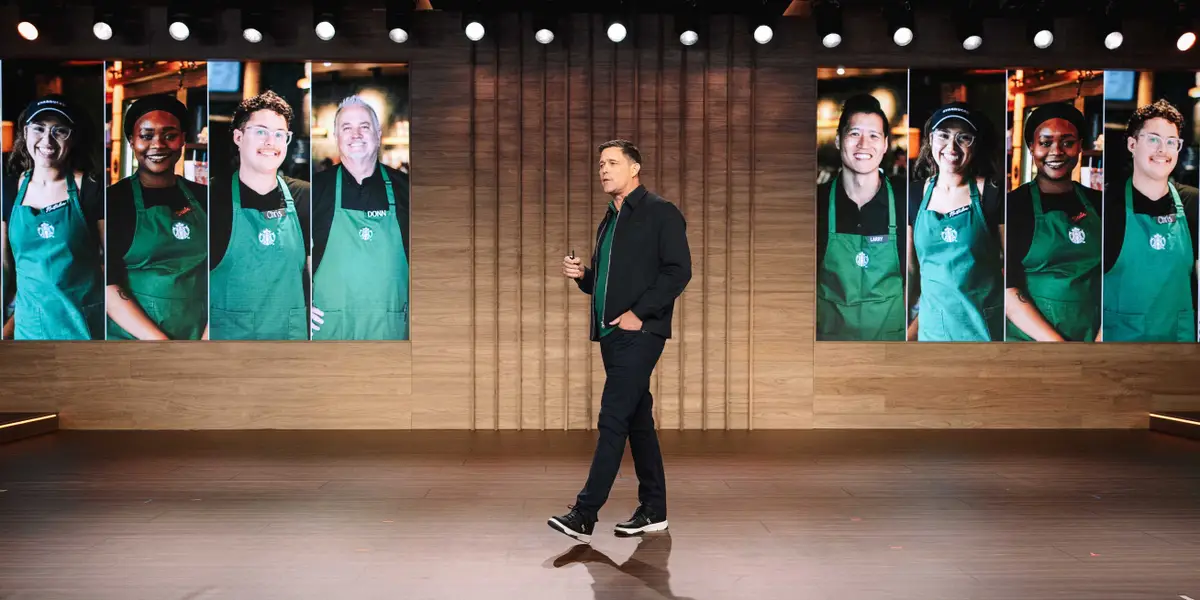
Why this visual matters: The image captures the essence of Starbucks’ cashflow comeback strategy, showcasing the commitment to enhancing customer experience and operational efficiency. This visual highlights both the primary keyword ‘Starbucks Cashflow Comeback’ and the secondary keyword ‘Starbucks Strategic Shift’ in the context of the company’s revitalization efforts.
Frequently Asked Questions
What is the “Back to Starbucks” initiative?
The “Back to Starbucks” initiative is a strategic effort led by the company to enhance customer experience, improve operational efficiency, and revitalize the brand following a period of declining sales.
How will Starbucks’ store redesigns affect customer experience?
The redesigns are aimed at creating a more inviting atmosphere that encourages customers to stay longer, which could enhance their overall experience and drive repeat visits.
What role does technology play in Starbucks’ strategy?
Starbucks is investing in advanced technology to streamline operations, improve service speed, and enhance the overall customer experience, including upgraded point-of-sale systems and virtual assistants.
What are the expected outcomes of Starbucks’ menu enhancements?
The menu enhancements are expected to attract health-conscious consumers and increase customer visits, which could positively impact sales and profitability.
Meet the Analyst
Marcus Vance, Tech Editor
Marcus Vance is an experienced analyst with a focus on the intersection of technology and consumer behavior. With over a decade of experience in the retail sector, he provides insights into how businesses can adapt to changing market dynamics.
Last Updated: March 2026 | HustleBotics Editorial Team