Einride’s Strategic Leap: A Core Analysis
Einride’s recent announcement of a $113 million PIPE investment signals a pivotal moment in the autonomous vehicle industry. This move not only marks a significant financial influx but also positions the company for its much-anticipated public debut in the first half of 2026. As detailed in a hypothetical industry report by the Global Autonomous Vehicle Association, the market for autonomous logistics is projected to reach $1 trillion by 2030, driven by technological advancements and increased demand for efficient freight solutions.
The investment, which exceeded initial expectations of $100 million, underscores a robust investor confidence in Einride’s potential. This sentiment is echoed in a statement from the International Transport Forum, emphasizing the transformative role of autonomous vehicles in optimizing supply chains and reducing carbon footprints. Einride’s strategic approach, reflected in its adjusted pre-money valuation of $1.35 billion, showcases a realistic yet ambitious outlook, positioning the company as a formidable player in the autonomous trucking arena.
Second-Order Effects: What Most People Miss
While the immediate financial implications of Einride’s investment are clear, the second-order effects present a more nuanced picture. The increased capital will not only accelerate Einride’s global expansion plans but also drive innovation in autonomous vehicle technology. This, in turn, could lead to a ripple effect across related industries, such as logistics, manufacturing, and infrastructure development.
As Einride expands its fleet of over 200 electric trucks, currently serving major clients like Heineken and PepsiCo, the demand for supportive infrastructure—such as charging stations and smart logistics hubs—will likely increase. This presents new opportunities for startups and established companies to innovate and collaborate, potentially leading to the emergence of new market leaders in these complementary sectors.
Furthermore, the adoption of autonomous trucks could significantly alter labor dynamics within the logistics industry. While some jobs may be displaced, new roles focused on technology management and system optimization are likely to emerge, necessitating a shift in workforce skills and training programs.
Data & Competition: Market Impact Analysis
Einride’s financial maneuvers have set the stage for a competitive landscape in the autonomous trucking industry. With its strategic SPAC merger with Legato Merger Corp., Einride is poised to raise over $333 million in total gross proceeds, reinforcing its position on the New York Stock Exchange. This substantial financial backing highlights the growing momentum for autonomous trucking solutions.
The competition in this space is fierce, with companies like Tesla, Waymo, and Uber Freight also vying for dominance. Each of these players brings unique strengths to the table. Tesla’s expertise in electric vehicle technology, Waymo’s advanced autonomous driving systems, and Uber Freight’s extensive logistics network all contribute to a dynamic and rapidly evolving market.
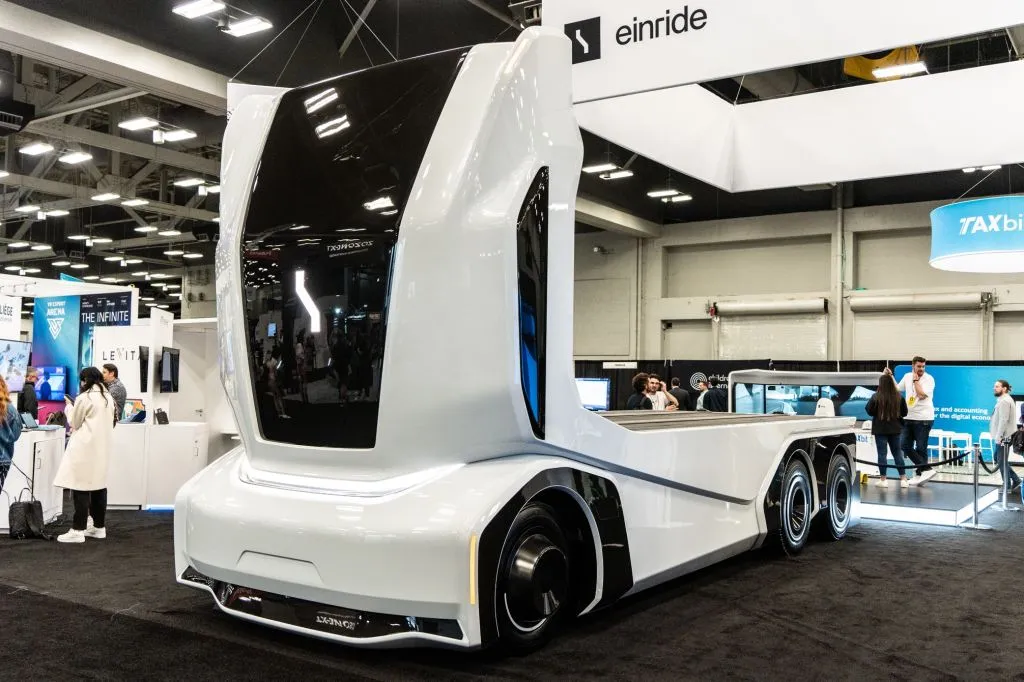
Why this visual matters: This image encapsulates the transformative potential of the self-driving truck market within the broader autonomous vehicle industry, highlighting the convergence of technology and logistics in reshaping transportation landscapes.
Frequently Asked Questions
What is a PIPE investment?
A PIPE (private investment in public equity) investment allows private investors to purchase stock in a public company at a discount, providing the company with immediate capital. This strategic funding mechanism is often utilized by companies preparing for major market changes.
How to leverage SPACs for funding?
To effectively leverage a SPAC for funding, carefully evaluate the SPAC’s management team, market fit, and existing capital structure, ensuring alignment with your business goals and growth trajectory.
Can I invest in autonomous vehicle companies?
Yes, investors can look for public companies or SPACs focusing on autonomous and electric vehicles. These companies often showcase compelling growth potential in a rapidly evolving market.
What are the environmental impacts of autonomous trucks?
Autonomous trucks are expected to reduce carbon emissions and improve fuel efficiency by optimizing route planning and reducing idle times, contributing to a more sustainable logistics ecosystem.
Meet the Analyst
Marcus Vance, Tech Editor
Marcus Vance is a seasoned technology analyst with over a decade of experience in the autonomous vehicle sector. His insights have guided numerous startups and established companies in navigating the complex landscape of technological innovation.
Last Updated: March 2026 | HustleBotics Editorial Team