Core Analysis: The Fusion Energy Revolution
Inertia Enterprises has recently garnered an impressive $450 million in Series A funding to pioneer a groundbreaking laser system designed for fusion energy production. This substantial investment, led by Bessemer Venture Partners and supported by notable firms such as GV, Modern Capital, and Threshold Ventures, underscores a pivotal shift towards sustainable and scalable energy solutions. The leadership team at Inertia includes prominent figures like Jeff Lawson, co-founder of Twilio, and Annie Kritcher, a key player in successful fusion experiments at the Lawrence Livermore National Laboratory.
According to a report by the International Energy Agency (IEA), the global fusion energy market is projected to reach $1 trillion by 2040, driven by increasing energy demands and the urgent need for clean energy alternatives. Inertia’s approach to utilizing inertial confinement fusion, where powerful lasers compress fuel targets until atomic fusion occurs, aims to significantly enhance energy production efficiency. They plan to construct a system of 1,000 lasers engaging 4.5 mm targets, an innovative strategy that contrasts sharply with the National Ignition Facility’s (NIF) existing setup, which employs 192 lasers on complex targets.
Furthermore, a recent analysis from Deloitte highlights that the fusion sector has attracted over $10 billion in investments in recent years, indicating an accelerating trend in the commercialization of fusion technology. Companies like Avalanche and Type One Energy are also making headlines with significant funding boosts to advance their projects, underscoring the competitive landscape growing around fusion energy.
What Most People Miss: Second-Order Effects
The excitement surrounding Inertia Enterprises’ funding and the broader fusion market often overlooks the second-order effects of this technological shift. First, as fusion energy becomes more viable, traditional fossil fuel industries may face intensified pressure to adapt or pivot their business models. The transition to fusion energy could accelerate policies aimed at reducing carbon emissions, resulting in a potential decline in investment and employment in fossil fuel sectors.
Moreover, the advancements in laser technology and energy production methods could stimulate growth in related industries. For instance, sectors such as manufacturing, material sciences, and energy storage may experience innovation surges as they adapt to new energy sources and production techniques. This ripple effect could lead to job creation in high-tech fields, shifting the employment landscape significantly.
Additionally, the success of Inertia Enterprises may inspire a wave of entrepreneurial ventures in the fusion space, leading to an influx of startups focused on niche technologies that support fusion energy infrastructure. The competitive environment could foster collaboration among companies, resulting in shared knowledge and accelerated technological advancements. As a result, we could witness a rapid evolution of energy solutions that prioritize sustainability and efficiency.
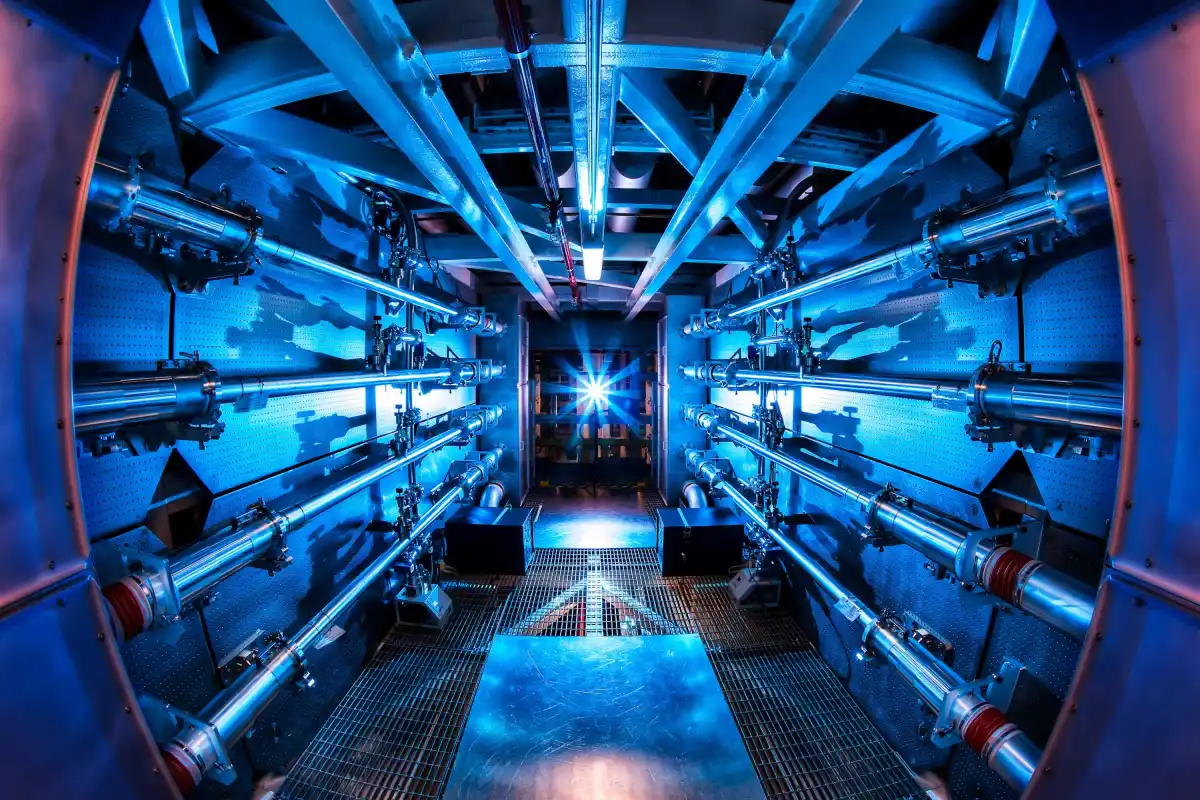
Why this visual matters: This image encapsulates the essence of the fusion energy revolution and highlights the potential of sustainable power solutions. Understanding the fusion energy landscape is crucial for entrepreneurs and investors looking to navigate this promising sector.
Data & Competition: Winners and Losers in the Fusion Market
The competitive landscape of the fusion energy sector is rapidly evolving, with notable winners and losers emerging from the recent investment frenzy. Inertia Enterprises stands out as a frontrunner, having secured substantial funding and a clear vision for commercial viability. Their focus on operational efficiency and cost reduction positions them favorably against established players like the National Ignition Facility.
However, the landscape is not without its challenges. Companies that fail to adapt or innovate may find themselves struggling to keep pace with the advancements in fusion technology. General Fusion and TAE Technologies, having opted for reverse mergers to go public, exemplify the confidence investors have in the sector, but they also face the daunting task of proving their technology and gaining market traction.
Emerging startups, such as Avalanche and Type One Energy, are also making significant strides, showcasing the diverse approaches being taken within the fusion space. With a collective investment exceeding $10 billion, the fusion sector is poised for growth, but the competition will be fierce, and only those who can deliver on their promises will thrive.
Frequently Asked Questions
What is Inertia Enterprises aiming to achieve with the new funding?
Inertia Enterprises aims to develop a groundbreaking laser system for fusion energy production, enhancing operational efficiency and commercial viability in the fusion energy sector.
Why is fusion energy considered a game-changer for sustainable power?
Fusion energy has the potential to provide a virtually limitless source of clean energy, significantly reducing reliance on fossil fuels and contributing to global efforts to combat climate change.
How is the competition shaping up in the fusion energy market?
The fusion energy market is becoming increasingly competitive, with both established players and new startups vying for investment and market share. Companies that can effectively innovate and demonstrate their technology will likely emerge as leaders.
What are the potential second-order effects of advancing fusion technology?
Advancing fusion technology may lead to a decline in traditional fossil fuel sectors, stimulate job creation in high-tech fields, and inspire a wave of entrepreneurial ventures focused on supporting fusion energy infrastructure.
Meet the Analyst
Marcus Vance, Tech Editor – With over a decade of experience in energy technology journalism, Marcus specializes in analyzing market trends and innovations in sustainable energy solutions.
Last Updated: March 2026 | HustleBotics Editorial Team