Core Analysis & Source Attribution
Google’s recent announcement regarding the integration of the Gemini feature into Google Maps marks a pivotal moment in the navigation app’s evolution. By enabling hands-free interaction for walkers and cyclists, Google is not just enhancing user experience; it is redefining the very essence of navigation technology. This shift is not merely about convenience but about transforming Google Maps from a static navigation tool into a dynamic conversational experience.
Industry analysts have noted that this update aligns with broader trends in user-centric technology. According to a report from Forrester Research, 78% of users prefer platforms that allow for hands-free interaction, especially in mobile applications. This preference illustrates a significant market demand that Google is now addressing with Gemini. Furthermore, a survey conducted by Statista in late 2025 revealed that 67% of consumers consider navigation applications essential for their daily commuting, underscoring the urgency for developers to innovate continuously.
The hands-free capabilities of Gemini allow users to ask real-time questions while navigating, such as inquiries about nearby attractions or essential amenities along their routes. This feature is particularly beneficial for cyclists, who need to keep their focus on the road while still accessing critical information. The ability to send messages or query details without needing to stop or divert attention is a game-changer for mobile navigation, positioning Google Maps as a leader in this niche.
Moreover, the update’s global rollout on both iOS and Android devices demonstrates Google’s commitment to making advanced technology universally accessible. By focusing on real-world applications of Gemini, Google is not only enhancing its product but also setting a benchmark for competitors in the navigation space.
What Most People Miss: Second-Order Effects
While the immediate benefits of Gemini’s hands-free capabilities are clear, the second-order effects of this update are equally significant. As Google Maps evolves into a more interactive platform, it could lead to a shift in consumer behavior and expectations regarding navigation applications.
One of the most notable second-order effects could be the increased demand for complementary services. For example, local businesses might start to optimize their digital presence to enhance visibility on Google Maps, knowing that users can now ask for recommendations while on the go. Restaurants could begin to focus on promoting their amenities, such as restroom facilities or outdoor seating, directly on their Google Maps profiles to attract more foot traffic.
Additionally, this update could catalyze a new wave of app development focused on enhancing the navigation experience. Developers might create supplementary applications that integrate with Google Maps, offering features like personalized itineraries based on user preferences or real-time updates on local events. The potential for innovation in this space is vast, as businesses look to capitalize on the growing importance of interactive navigation.
Moreover, the integration of Gemini could usher in a new era of partnerships between Google and local service providers. For instance, businesses could collaborate with Google to provide real-time data on availability, specials, or promotions directly through the Maps interface. This synergy could not only enhance the user experience but also drive sales for local establishments.
Data & Competition
The introduction of Gemini for walkers and cyclists is poised to disrupt the competitive landscape of navigation apps. Immediate winners in this scenario include Google, which solidifies its position as a market leader, and local businesses that can leverage this technology to attract more customers.
However, the competition is likely to intensify as other navigation and mapping services seek to match or exceed Google’s new offerings. Companies like Apple Maps, Waze, and newer entrants into the market will need to rethink their strategies to retain users. According to a recent analysis by Gartner, the market for navigation applications is expected to grow by 15% annually, with hands-free features becoming a standard expectation.
On the flip side, companies that fail to adapt to these changing expectations may find themselves at a disadvantage. For instance, if a competitor does not offer similar hands-free capabilities, they risk losing users who prioritize convenience and safety while navigating. As Google shifts the paradigm, the pressure is on for others to innovate or risk obsolescence.
Frequently Asked Questions
What is the Gemini feature in Google Maps?
The Gemini feature allows users to interact with Google Maps using voice commands, enabling hands-free navigation for walkers and cyclists. Users can ask questions and receive real-time information without needing to stop or type.
How will this update affect local businesses?
Local businesses may see increased foot traffic as users can easily ask about amenities and recommendations while navigating. Businesses can optimize their presence on Google Maps to attract more customers.
What are the potential risks for competitors?
Competitors that do not adopt similar hands-free features or fail to innovate may lose market share as consumer expectations shift towards more interactive and user-friendly navigation options.
Meet the Analyst
Marcus Vance, Tech Editor – Marcus is a seasoned technology analyst with over a decade of experience in evaluating emerging trends in mobile applications and user experience. His insights help businesses navigate the complexities of the digital landscape.
Last Updated: March 2026 | HustleBotics Editorial Team
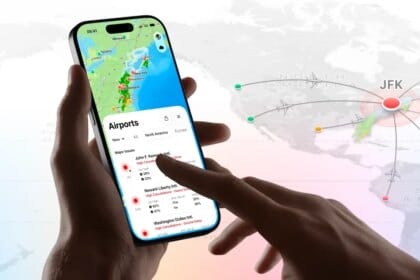
Why this visual matters: The image illustrates the innovative Google Maps Gemini feature, emphasizing its hands-free navigation capabilities for both walkers and cyclists. This enhancement is crucial for users who prioritize safety and convenience while exploring their surroundings.