Transformative Technology for Entrepreneurs
The future of manufacturing is not just approaching; it is here, dramatically altering how entrepreneurs conceptualize production and scalability. FreeForm, a trailblazing startup, has recently captured attention by securing an impressive $67 million in Series B funding to amplify its groundbreaking 3D metal printing platform. Notable investors, including Apandion, AE Ventures, Founders Fund, Linse Capital, Nvidia’s NVentures, Threshold Ventures, and Two Sigma Ventures, are backing this venture, underscoring the immense potential perceived in this transformative technology.
Although FreeForm has yet to publicly disclose its post-funding valuation, PitchBook estimates it at a remarkable $179 million. This valuation reflects not only the confidence of investors but also the anticipated impact of FreeForm’s innovative approach to metal printing.
Innovative Foundations
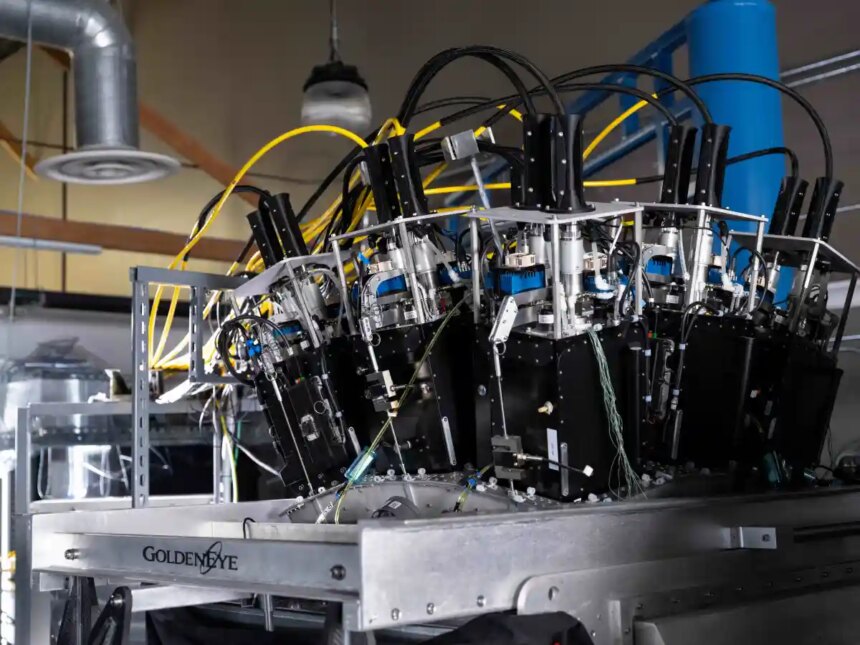
Founded in 2018 by Erik Palitsch, FreeForm was conceived in the high-stakes environment of SpaceX. Recognizing that existing metal printing technologies were prohibitively expensive, cumbersome, and ill-suited for mass production, Palitsch aimed to create a platform that optimizes throughput and flexibility. The result is the GoldenEye printing system, which utilizes 18 lasers to manufacture precision metal components. The forthcoming iteration, dubbed Skyfall, promises to revolutionize the industry further by employing hundreds of lasers capable of producing thousands of kilograms of metal parts daily.
FreeForm’s strategic direction aligns seamlessly with industry reports that forecast a significant increase in demand for advanced manufacturing solutions. According to a recent McKinsey report, the market for advanced manufacturing is expected to grow by over 25% annually, driven by the need for efficiency and customization. This presents unique opportunities for entrepreneurs to scale rapidly and meet evolving market demands.
Data-Driven Manufacturing
One of the defining characteristics of FreeForm’s operations is its commitment to data-driven manufacturing. By integrating real-time data collection through machine sensors and simulations, the company is able to refine production quality and enhance output efficiency. This strategic advantage positions FreeForm ahead of its competitors by enabling effective quality control and operational efficiency.
Industry analysts have noted that the ability to leverage data insights is becoming increasingly critical in the manufacturing sector. A report from Deloitte highlights that manufacturers utilizing data analytics can achieve up to a 20% increase in productivity, a compelling statistic that underscores the importance of technological investment in production capabilities.
Growth and Expansion
Despite Palitsch’s inability to disclose specific clients, he confirmed that FreeForm is currently supplying hundreds of critical components weekly. The company’s ambition to expand its workforce by adding up to 100 new roles and increasing its facility size indicates a robust growth trajectory. This aligns with broader trends in manufacturing, where companies are increasingly recognizing the necessity of scaling operations to meet rising demand.
Shifting Market Dynamics
The rise of manufacturing-as-a-service is gaining significant traction, drawing the attention of venture capitalists eager to innovate across various sectors, including vehicles, robotics, and energy systems. Companies like Hadrian, which recently achieved a staggering valuation of $1.6 billion by automating production for defense applications, highlight the robust demand for modern solutions in manufacturing. This shift is indicative of a broader trend where traditional manufacturing paradigms are being disrupted by innovative technologies and new business models.
As the manufacturing industry evolves, entrepreneurs are presented with a unique opportunity to capitalize on these shifts. The convergence of advanced manufacturing technologies and data analytics represents a fertile ground for innovation and growth. Now is the time for businesses to explore these methodologies and harness their potential to streamline production and accelerate success.
Why this visual matters: Understanding the laser manufacturing goldmine is crucial for entrepreneurs aiming to profit from market disruption. By grasping the dynamics of this evolving landscape, businesses can position themselves strategically to leverage new opportunities.
What Most People Miss: Second-Order Effects
While the immediate implications of FreeForm’s advancements in manufacturing are evident, the second-order effects are equally worthy of exploration. As companies like FreeForm innovate and disrupt traditional manufacturing processes, we may witness a cascading effect across various sectors. For instance, industries that rely on metal components—such as automotive, aerospace, and defense—will experience shifts in supply chain dynamics, resulting in potentially lower costs and faster production cycles.
Moreover, the rise of manufacturing-as-a-service could lead to a decentralization of production capabilities. As more startups adopt similar models, we may see a trend toward localized manufacturing, reducing transportation costs and carbon footprints. This shift could also empower small to medium-sized enterprises (SMEs) to compete more effectively with larger corporations, fostering innovation and diversity within the market.
Additionally, the integration of data analytics into manufacturing processes will likely lead to enhanced collaboration between manufacturers and suppliers. As businesses gain access to real-time production data, they can make more informed decisions, optimizing their supply chains and improving overall operational efficiency. This interconnectedness may pave the way for new partnerships and business models, further disrupting the traditional manufacturing landscape.
Data & Competition
In the competitive landscape of manufacturing, the winners will be those who can adapt quickly to new technologies and market demands. FreeForm’s innovative approach positions it as a frontrunner, but it is essential to consider the broader competitive dynamics at play. Companies that fail to embrace advanced manufacturing techniques risk being left behind as the industry evolves.
The impact of FreeForm’s advancements will likely ripple through the manufacturing sector, influencing competitors to innovate or risk obsolescence. Firms that are slow to adapt may find themselves at a disadvantage, unable to meet the demands of a rapidly changing market. The growing interest from venture capitalists in manufacturing-as-a-service indicates that investment in this space will continue to surge, further intensifying competition.
As FreeForm demonstrates, operational efficiency and quality control driven by data analytics are becoming non-negotiable for success in manufacturing. Companies that prioritize these elements will not only enhance their market position but also improve profitability. The potential for disruption is significant, and those who recognize and act on these trends stand to gain the most.
Frequently Asked Questions
What is FreeForm’s primary focus in manufacturing?
FreeForm specializes in 3D metal printing, utilizing advanced laser technology to produce precision components efficiently and at scale.
How does FreeForm’s technology differ from traditional manufacturing methods?
FreeForm employs a unique printing system that integrates real-time data collection and advanced software controls, allowing for increased production efficiency and flexibility compared to traditional methods.
What are the implications of manufacturing-as-a-service for businesses?
Manufacturing-as-a-service offers businesses the opportunity to access advanced production capabilities without the need for significant capital investment, enabling greater scalability and responsiveness to market demands.
How can entrepreneurs capitalize on the advancements in manufacturing technology?
Entrepreneurs can leverage innovative manufacturing methodologies and data-driven insights to improve operational efficiency, enhance product quality, and respond swiftly to market changes, positioning themselves for success in a competitive landscape.
Meet the Analyst
Marcus Vance, Tech Editor – A seasoned technology analyst with over a decade of experience in evaluating emerging trends, Marcus specializes in the intersection of manufacturing and innovation, providing insights that empower entrepreneurs to navigate the evolving landscape.
Last Updated: March 2026 | HustleBotics Editorial Team