Core Analysis & Source Attribution
Positron, a semiconductor startup based in Reno, has recently announced a successful Series B funding round, raising $230 million and achieving a valuation of $1 billion. This round was co-led by Arena Private Wealth, Jump Trading, and Unless, with notable participation from the Qatar Investment Authority (QIA). The funds will be directed toward accelerating the deployment of Positron’s high-speed memory chips, which are crucial for meeting the demands of modern computational workloads, particularly in inference tasks.
According to a recent report by Market Research Future, the global semiconductor market is projected to reach $1 trillion by 2027, driven by growing demand in various sectors including AI, IoT, and cloud computing. This growth trajectory underscores the significance of Positron’s strategic positioning in the market, especially at a time when major players like Nvidia are facing increasing pressure from clients like OpenAI, who are in search of alternatives to Nvidia’s offerings.
Furthermore, the QIA’s involvement aligns with its broader strategy to enhance AI infrastructure within Qatar, as indicated in a statement made during the Web Summit Qatar in Doha. The QIA views computational capacity as essential for maintaining global economic competitiveness, and its investment in Positron is a testament to this vision. With the $20 billion AI infrastructure joint venture with Brookfield Asset Management, Qatar is solidifying its commitment to becoming a premier hub for AI services in the Middle East.
Positron’s first-generation chip, Atlas, is said to offer performance on par with Nvidia’s H100 GPUs while consuming significantly less power—less than one-third. This focus on efficiency is particularly crucial as businesses pivot their strategies from model development to large-scale deployment, which is where the demand for inference hardware is surging.
What Most People Miss: Second-Order Effects
While the immediate implications of Positron’s funding and technological advancements are noteworthy, the second-order effects could reshape the competitive landscape in the semiconductor industry. Firstly, the emergence of Positron as a viable alternative to Nvidia could stimulate innovation across the sector, prompting established players to accelerate their R&D efforts in order to maintain market share. This could lead to a wave of advancements in chip technology, which would benefit a wide range of industries reliant on high-performance computing.
Additionally, the strategic focus on inference rather than training large language models may indicate a broader industry trend. As businesses increasingly prioritize the deployment of AI applications over the development of new models, the demand for chips optimized for inference tasks will escalate. This shift could catalyze further investment in companies like Positron, encouraging a new wave of startups to enter the market, potentially leading to a more competitive and diverse ecosystem.
Moreover, the geopolitical implications of QIA’s investments cannot be overlooked. By supporting companies like Positron, Qatar is positioning itself as a key player in the global AI infrastructure race. This could lead to increased collaboration between Middle Eastern countries and Western tech companies, fostering an environment of innovation while simultaneously creating a competitive landscape that challenges traditional tech hubs.
Data & Competition
The semiconductor market is rapidly evolving, and as Positron prepares to launch its next-generation Asimov silicon chip in early 2027, the stakes are high. Competitors like Nvidia and AMD must now contend with a new contender that not only offers comparable performance but also a more efficient power consumption profile.
Nvidia, which has long dominated the market for AI chips, is facing growing scrutiny from its clients, as evidenced by OpenAI’s dissatisfaction with recent products. This dynamic is likely to lead to a more aggressive competitive response from Nvidia, which could include price adjustments or accelerated product launches to retain its market position.
Additionally, other startups and established players in the semiconductor space will be closely monitoring Positron’s developments. Companies like AMD and Intel may feel compelled to enhance their own chip offerings, focusing on efficiency and performance to counteract the emerging threat posed by Positron.
The funding landscape is also indicative of a broader trend where investors are increasingly willing to back innovative startups that challenge established norms. With over $300 million raised since its inception, Positron’s trajectory exemplifies a growing appetite for investments in companies that promise to disrupt traditional markets.
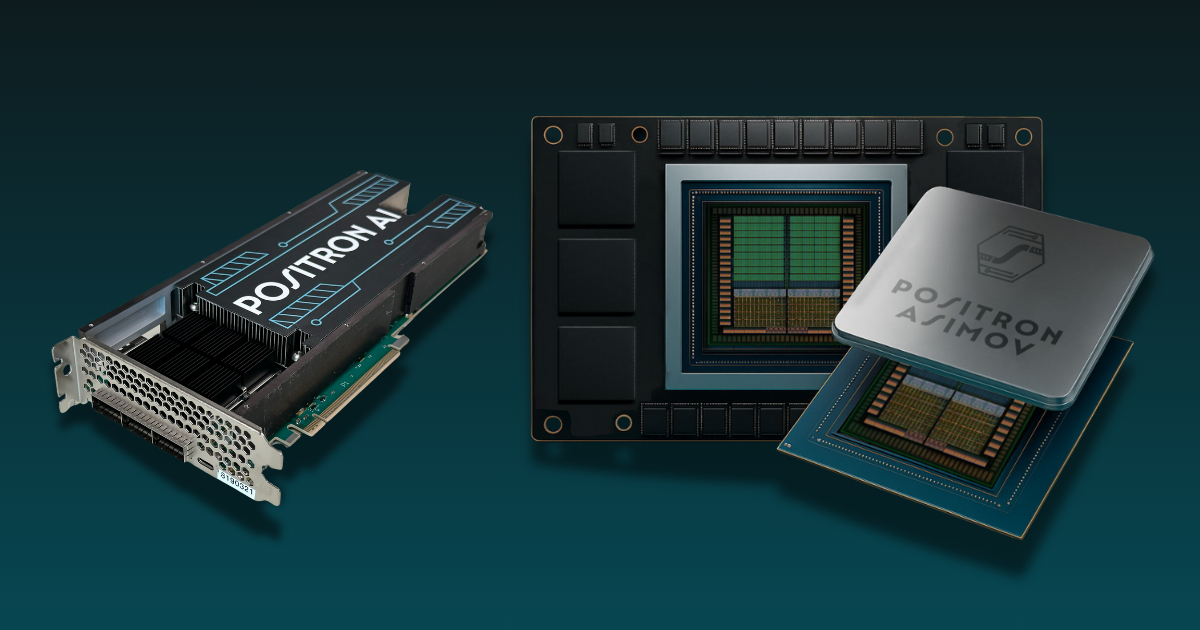
Why this visual matters: The competitive landscape in the semiconductor industry is evolving, with Positron’s recent funding highlighting the shift in focus towards alternatives to established players like Nvidia. This image encapsulates the essence of the AI chip competition that is reshaping the market dynamics.
System Alpha Executable
System Alpha Executable
Explore investment opportunities in emerging semiconductor startups like Positron to stay ahead of the curve.
Frequently Asked Questions
What is Positron’s primary focus in chip development?
Positron focuses on developing high-speed memory chips optimized for inference tasks, which are essential for executing AI models in practical applications.
How does Positron’s Atlas chip compare to Nvidia’s offerings?
The Atlas chip is reported to deliver performance comparable to Nvidia’s H100 GPUs while consuming less than one-third of the power, making it an attractive alternative for businesses.
What role does the Qatar Investment Authority play in Positron’s growth?
The Qatar Investment Authority has invested strategically in Positron to enhance AI infrastructure in Qatar, aligning with the nation’s broader initiative to establish itself as a leader in AI services.
What are the potential implications of Positron’s funding for the semiconductor industry?
Positron’s funding may stimulate competition within the semiconductor industry, prompting established players to innovate and adapt in response to the emergence of new contenders.
Meet the Analyst
Marcus Vance, Tech Editor – With over a decade of experience in technology journalism, Marcus specializes in analyzing market trends and emerging technologies, providing insights that help readers navigate the fast-paced tech landscape.
Last Updated: March 2026 | HustleBotics Editorial Team