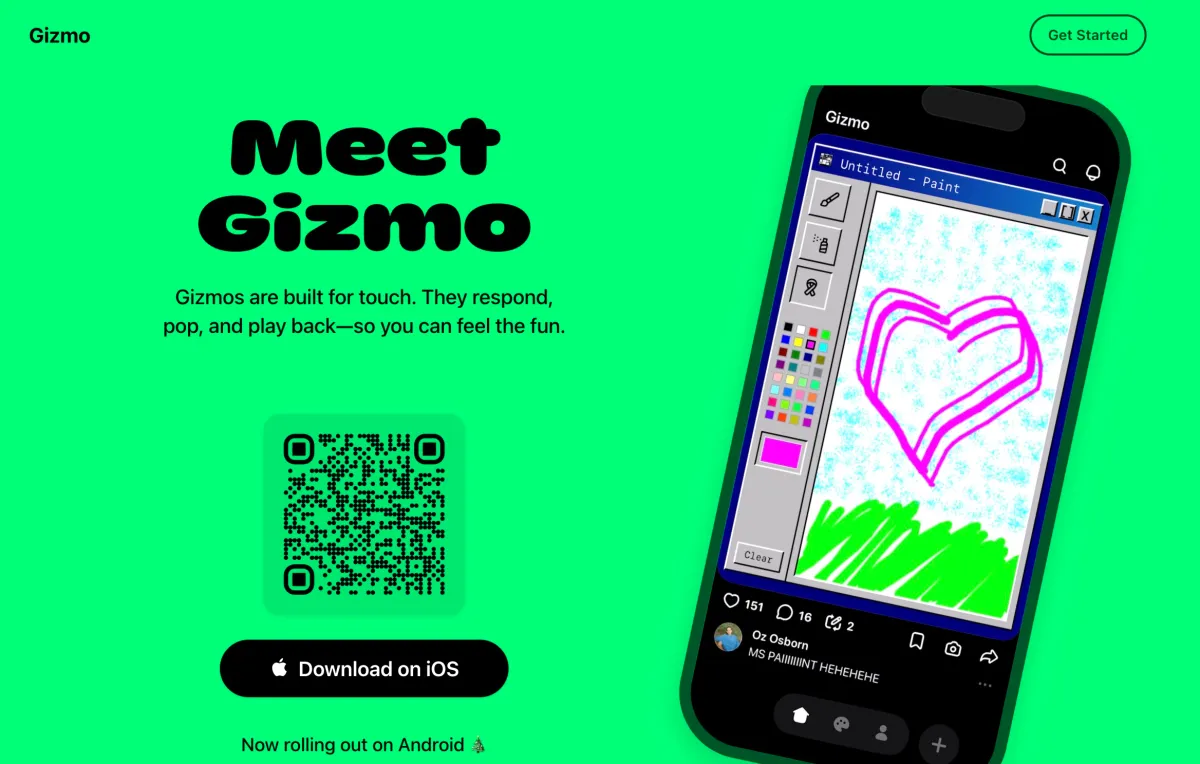
Gizmo, a groundbreaking app akin to TikTok that features vibrant-coded mini applications, is revolutionizing the way interactive media is created. This innovative mobile application, developed by the startup Atma Sciences, empowers users to craft engaging experiences using text, images, audio, and tactile inputs, all presented in a vertical feed reminiscent of TikTok or Reels. However, unlike conventional short-form video platforms, Gizmo invites users not just to watch and scroll, but to actively participate.
Depending on the nature of the “Gizmo” you explore, users may engage by tapping, swiping, drawing, dragging, and more. These Gizmos transcend mere games; they represent a new category of digital toys that includes interactive puzzles, memes, artwork, animations, and anything a creator can envision.
This results in an interactive and dynamic feed where users can express appreciation, comment on the unique creations, and even remix existing Gizmos to innovate their own versions.
Importantly, users do not need prior coding knowledge or even an understanding of vibe coding to begin. All that is required is to articulate an idea in natural language through an AI prompt.
The application utilizes advanced AI coding technology to transform your concept into an interactive experience by automatically generating the required code. As part of this process, Gizmo also visualizes your idea to ensure that each mini-application operates effectively and seamlessly. The application goes through a vetting process involving both AI and human moderation to guarantee user safety, as noted in the company FAQ.
Gizmo is the brainchild of Atma Sciences, a New York-based startup co-founded by Rudd Fawcett, Brandon Francis, along with CEO Josh Siegel and CTO Daniel Amitay. The company successfully raised $5.49 million in seed funding from First Round Capital and other investors, as reported by PitchBook. On their engagingly interactive website, the team articulates their vision of merging “powerful technology with simple, elegant foundations,” starting with their creativity application, Gizmo.
Unfortunately, TechCrunch’s requests for interviews with the company’s founders were met with silence. An investor informed us that the team is not yet prepared for media engagements.
TechCrunch Event
Boston, MA
|
June 23, 2026
TechCrunch is captivated by Gizmo due to its growth potential and unique approach to vibe coding—a sentiment echoed by a rare endorsement from my teenager. The company envisions a future where anyone can create playful applications, in contrast to other vibe-coding platforms that typically focus on practical functionality.
Despite its novelty, Gizmo’s feed remains fresh and diverse, offering an array of creative mini applications. This leads to an experience reminiscent of a hybrid between TikTok and the interactive 3D-space designer, Rooms. While Rooms introduced the Lua programming language for users seeking advanced customization, Gizmo simplifies the process through straightforward prompts.
Utilizing the app is remarkably straightforward. Users can simply type a prompt, review the output, and modify their creation as needed. In one instance, the AI successfully developed a mini quiz, although we had to request an adjustment to the title, which was cut off at the top of the display.
Users can share their creations to the app’s feed, send them to friends, or post them on social media through a unique URL.
According to insights from Appfigures, Gizmo has garnered approximately 600,000 downloads, with nearly half originating from the U.S. following its discreet introduction less than six months ago. Notably, around 235,000 downloads occurred in December alone, constituting 39% of its overall total.
Gizmo experienced an impressive growth trajectory from October to December, with an increase of 312%, as December installs surged by 50% month-over-month and November installs rose by 180% compared to October.
The application is available for both iOS and Android platforms.
About the Author