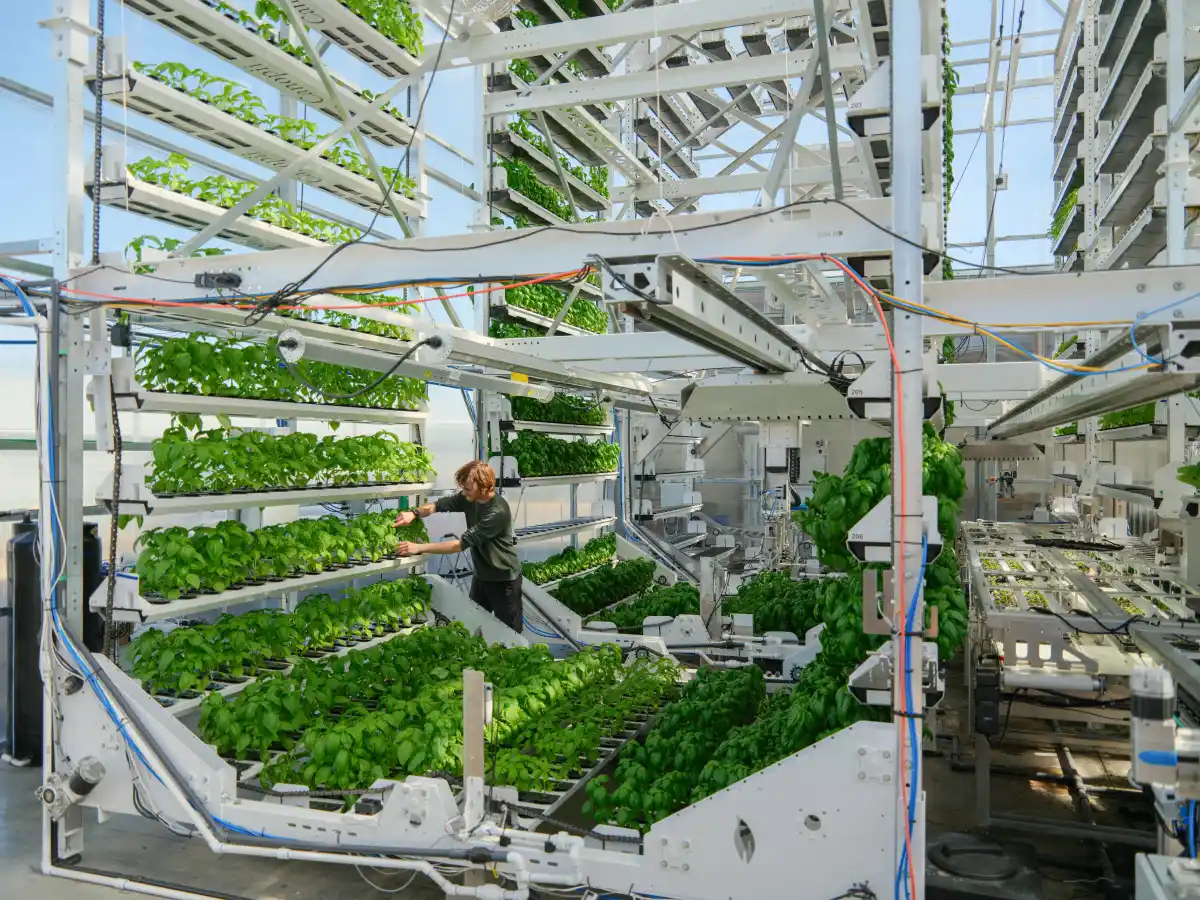
Revolutionizing Agriculture: A Deep Dive into Canopii’s Autonomous Robotic Greenhouses
The agritech ecosystem is on the brink of a transformative shift. With entrepreneurs constantly searching for innovative solutions to enhance food production within sustainable frameworks, Canopii’s groundbreaking robotic greenhouses represent a pivotal opportunity. Driven by the necessity of enhancing food security, this transformative technology has the potential to redefine agricultural practices globally.
🌐 CONTEXT & BACKGROUND
The challenges of feeding a growing global population, particularly in the face of climatic adversities, cannot be understated. Traditional farming methods are confronting severe drawbacks due to increasing water scarcity, unpredictable weather patterns, and the long distances produce travels to reach consumers. Canopii’s autonomous farming solution addresses these pressing issues by streamlining the food supply chain and significantly reducing water usage.
Historically, the agricultural sector was dominated by labor-intensive practices relying on vast amounts of land and water. Inefficiencies were rampant, and as sustainable practices gained traction, many traditional farming methods fell short. Before the advent of innovative automated farming, agribusinesses struggled to balance productivity with ecological preservation, often leading to financial loss and environmental degradation. Canopii effectively fills this gap, offering an elegant solution that marries technology with agriculture.
📊 MARKET IMPACT ANALYSIS
The launch of Canopii’s autonomous greenhouses is set to position the company as a formidable player in the agritech market. The winners in this scenario include urban areas that will benefit from localized, sustainable food sources and agriculture-focused entrepreneurs eager to leverage this tech. Conversely, traditional farming methods and older agritech companies risk losing market share if they cannot adapt to emerging automated solutions.
This technology specifically disrupts sectors reliant on high water usage and large-scale production techniques. It introduces a new business model based on localization and efficiency. The financial opportunities are significant—companies leveraging this technology can see reduced operational costs while improving output quality and sustainability. Key players in sectors such as food distribution, restaurant chains, and grocery stores will find immense value in automating their supply chains through partnerships with Canopii.
⚔️ COMPETITIVE COMPARISON
The agritech landscape is dotted with competitors, and while some companies emphasize vertical farming, Canopii takes a different approach, focusing on robotics. Traditional vertical farms face issues such as high energy demands and limited crop diversity, whereas Canopii’s model offers a revolutionary, energy-efficient solution that requires minimal resources.
Competitors like Bowery Farming and Plenty have attracted hefty investments, but many have encountered substantial financial pitfalls due to unsustainable growth practices. Canopii demonstrates a more grounded approach, having raised a modest $3.6 million primarily through grants, showcasing resilience against external pressures. This prudent growth also allows for an iterative product development cycle, refining their technology without a relentless pace imposed by venture capital expectations.
🛠️ REAL-WORLD USE CASES & MONETIZATION
The implementation of Canopii’s greenhouses opens up a plethora of monetization opportunities for startups and solo entrepreneurs. Here are three scalable workflow ideas:
- ⚡ **Urban Farming Partnerships**: Partner with local restaurants to supply fresh produce directly from the greenhouse, reducing logistical complexities and delivery costs.
- ⚡ **Educational Collaborations**: Work with schools to implement small-scale operations on campus—providing hands-on learning experiences around sustainable farming practices.
- ⚡ **Franchising Models**: Utilize the scalable nature of Canopii’s design to franchise the produce farms, allowing aspiring entrepreneurs to invest in a proven system with a high potential ROI.
📈 DATA & TRENDS
Market research indicates that the agricultural automation sector is poised for explosive growth, with a projected CAGR of 25% by 2026. Investment in automation systems is expected to escalate, surpassing $120 billion globally. User adoption trends show a marked increase, particularly in urban regions where food distribution costs and ecological footprints must be minimized.
As more consumers demand locally sourced, fresh produce, companies utilizing automated farming practices are likely to benefit not only from elevated market demand but also from enhanced operational efficiencies.
🧠 HUSTLEBOTICS EDITORIAL INSIGHT
Based on our analysis at HustleBotics, the success of companies like Canopii is emblematic of a larger shift towards sustainable and innovative agricultural practices. This technology not only meets present-day challenges but also sets the groundwork for future advancements. The long-term implications of such innovations will likely reshape our food systems, establishing a new norm in how and where we grow our food.
🔮 FUTURE PREDICTIONS
Looking forward, the next six months could see Canopii actively establishing its commercial farm in Portland, paving the way for additional local partnerships and a growing user base. In two years, if Canopii successfully demonstrates the scalability and efficiency of its model, we can expect a rush of interest from investors eager to capitalize on a viable, sustainable agricultural revolution. This may indeed represent a pivot point for the industry, steering agritech toward a more automated and eco-conscious future.
❓ FAQ SECTION
What is Canopii’s unique selling proposition?
Canopii’s autonomous greenhouses run the entire crop-growing process from seed to harvest without any human intervention, providing an efficient solution to food production challenges.
How can I implement a similar system in my business?
Businesses can adopt Canopii’s model by investing in automated greenhouses and forming partnerships with local suppliers and customers to enhance their operational efficiency.
Can I franchise a Canopii farm?
Yes, Canopii plans to initiate a franchising model, allowing entrepreneurs to invest in and operate their own version of the innovative farming system.
What are the potential financial benefits of using automated farming systems?
Financial benefits include reduced operational costs, increased productivity, and improved produce quality, all contributing to a higher ROI for businesses engaging in automated agriculture.
How sustainable are Canopii’s farming methods?
Canopii’s robotic greenhouses utilize minimal water and energy, emphasizing resource efficiency and supporting environmentally sustainable farming practices.