🌐 CONTEXT & BACKGROUND
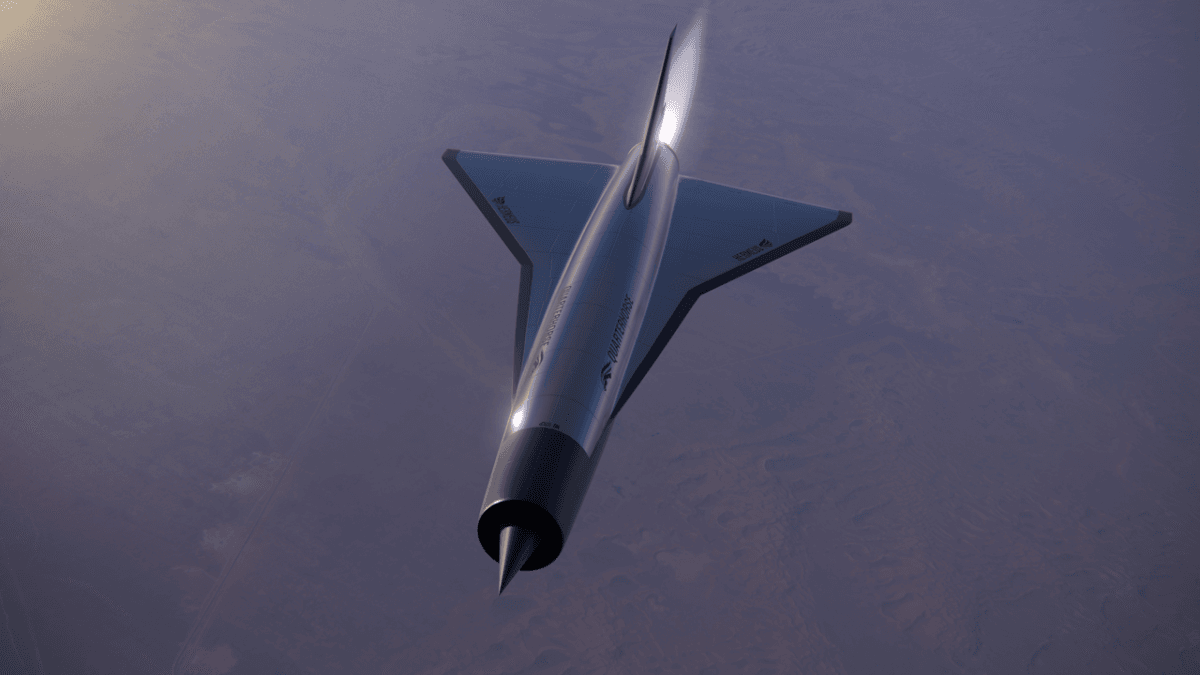
For entrepreneurs, the advent of advanced defense automation systems represents a pivotal shift in the landscape of technological innovation. The latest breakthroughs from Hermeus, which boasts the fastest unmanned aircraft under development, are not just feats of engineering; they signal enormous opportunities for investment and application across various sectors.
Historically, the aviation industry has been characterized by slow prototyping cycles and rigorous regulatory hurdles. Yet, in the face of global challenges, from national security to efficient cargo transport, the drive for rapid and efficient aerial systems has gained urgency. The market prior to Hermeus’s recent funding round saw established aerospace players entrenched and defense startups struggling to secure significant capital, thus hampering innovation.
📊 MARKET IMPACT ANALYSIS
With a whopping $350 million in recent funding, the momentum has shifted dramatically. Hermeus is one of the key winners as it positions itself at the forefront of unmanned aerial vehicle (UAV) technologies. The influx of venture capital and strategic partnerships demonstrates a confidence in the scalability and applicability of its proprietary tech.
Losers in this scenario might include outdated defense contractors that are clinging to traditional aerospace models and practices. Industries that are likely to face disruption include logistics, surveillance, and national defense. Firms relying on conventional aeronautics will see decreased opportunities as the speed and efficiency of hypersonic technologies become integrated into logistics and military operations.
The sheer financial potential of the innovation is staggering. With government contracts typically exceeding billions for advanced technology, the opportunity for notable returns on investment (ROI) is unprecedented. Not only does this technology promise speed and efficiency, but it also delivers on a growing demand for unmanned surveillance and combat capabilities.
⚔️ COMPETITIVE COMPARISON
When comparing Hermeus to its direct competitors, the benchmarks are impressive. The norm in this domain has been the development of bespoke engines and long-term research commitments, often taking decades. In contrast, Hermeus achieved strategic collaboration with RTX subsidiary Pratt & Whitney, cutting down development time by utilizing an existing engine that has proven reliability.
Certain other startups have aimed high, but the pragmatic approach of Hermeus to collaborate and innovate rapidly has led to significant leaps forward. Companies like Joby Aviation and Skydrive, while also pioneering in their respective sectors, have not yet reached the same stage of advancement. Hermeus’s dual strategy of optimizing existing technology while innovating for hypersonic speed gives it an edge in terms of practical application, time to market, and cost efficiency.
🛠️ REAL-WORLD USE CASES & MONETIZATION
Here are three specific workflow ideas entrepreneurs can tap into immediately:
- ⚡ **Cargo Transport:** Utilize Hermeus designs to develop on-demand payload systems for expedited delivery services, drastically reducing shipping times within and to remote areas.
- ⚡ **Surveillance & Reconnaissance:** Market custom analytics software that integrates with Hermeus aircraft for military and civilian applications, enhancing data collection and real-time surveillance capabilities.
- ⚡ **Rapid Prototyping Services:** Start a consulting firm that helps other aerospace entities adopt rapid prototyping methodologies informed by Hermeus’s innovations, ensuring quicker turnarounds and lower development risks.
📈 DATA & TRENDS
The investment landscape for defense tech is evolving rapidly. In 2022 alone, global VC investment in defense surpassed $9 billion across 265 rounds, with startups focusing on advanced aerial systems attracting a good share of that income.
Looking ahead, analysts project a compound annual growth rate (CAGR) of 12% for the hypersonic tech market, indicating a future market valuation exceeding $50 billion by 2026. User adoption rates are also expected to climb sharply, as modular drone technologies become standard in defense operations.
🧠 HUSTLEBOTICS EDITORIAL INSIGHT
Based on our analysis at HustleBotics, Hermeus’s transformational position in the defense sector signals a robust opportunity for tech entrepreneurs. The convergence of aerial automation and military applications marks a watershed in which businesses that pivot quickly stand the best chance for growth. Startups should overlay their unique proposals onto this existing momentum to capture significant early-stage interest.
🔮 FUTURE PREDICTIONS
In six months, we expect to see Hermeus finalize contracts with the U.S. government, securing a pivotal foothold in defense automation. This early traction may set the stage for further investment and expansion, as other startups follow suit.
In two years, as production ramps up, expect conversations around UAVs to become common in daily operating strategies in diverse sectors, from logistics to emergency services. We anticipate the emergence of multiple UAV startups that will aspire to replicate Hermeus’s unique blend of speed, efficiency, and innovation.
This moment may well be a true pivot point in the industry rather than just transient hype, as companies that innovate will fundamentally reshape automation paradigms.
❓ FAQ SECTION (SEO Booster)
What is the significance of Hermeus’s recent funding?
Hermeus has raised $350 million to enhance its development of the fastest unmanned aircraft, marking a significant leap in defense technology funding and representing broader trends towards automation in sectors requiring rapid aerial capabilities.
How can I capitalize on advancements in unmanned aerial vehicles?
Entrepreneurs can explore various monetization opportunities such as developing logistics solutions, targeting military contracts, or launching consulting services rooted in rapid prototyping methodologies inspired by Hermeus’s success.
Can I incorporate hypersonics into existing infrastructure?
Yes, businesses can adapt current logistics and delivery models using hypersonic technologies; coupling existing operations with speedier aerial transport can significantly enhance service delivery and customer satisfaction.
What industries will be most affected by this technology?
Industries such as logistics, national defense, surveillance, and emergency services are set to experience significant transformations as hypersonic systems integrate into their standard operating procedures.
How do defense technologies impact civilian applications?
Defense technologies, like the ones being developed by Hermeus, often spark innovations that transition into civilian use, particularly in areas like rapid transport and drone-enabled analytics, thus facilitating efficiency improvements across sectors.