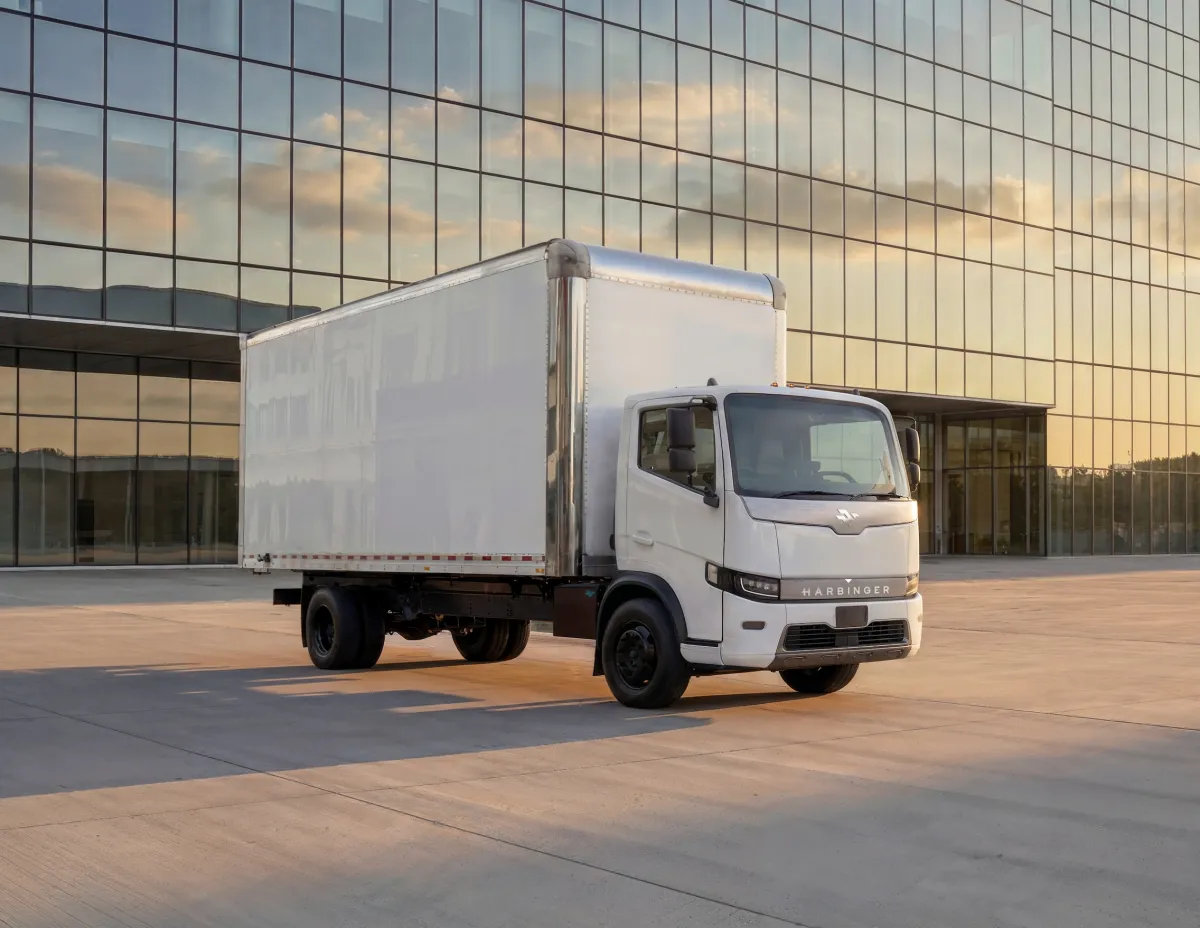
Entrepreneurs in the rapidly evolving transportation landscape must pay close attention to the latest release from Harbinger, a Los Angeles-based electric vehicle (EV) startup. Their introduction of the HC Series Cab, a medium-duty work truck offered in all-electric and hybrid formats, not only addresses key operational pain points but also signifies a paradigm shift in commercial vehicle technology. This analysis will explore the implications of Harbinger’s latest model, its trajectory, and the broader market landscape.
Founded in 2022, Harbinger represents a new wave of mobility solutions aimed at transforming the commercial trucking sector. Prior to their entrance, fleets struggled with a myriad of challenges that had remained largely unaddressed. Traditional work trucks often forced fleets to compromise on payload capacity, maneuverability, range, and onboard functionality. The launch of their HC Series Cab offers a solution to these historic dilemmas, presenting a vehicle designed to outperform legacy diesel options while harnessing the inherent advantages of electrification.
📊 MARKET IMPACT ANALYSIS
The emergence of Harbinger’s innovative HC Series Cab has undeniably positioned the company as a significant player within the EV sector, marking a clear win for fleet operators seeking more efficient and effective solutions. With FedEx and RV manufacturer THOR Industries already among its clientele, Harbinger is not only gaining traction but also asserting its foothold in a competitive landscape.
However, while Harbinger makes gains, legacy automakers and traditional diesel manufacturers face potential disruption. The hybrid variant of the HC Series Cab, boasting a range of up to 500 miles, could lure fleets currently reliant on conventional vehicles, challenging existing market share dynamics. This is particularly true in industries such as logistics, construction, and other sectors where medium-duty trucks play a pivotal role.
This transition towards electrified vehicles opens several avenues for sustainable business leverage. Cost reductions through decreased maintenance needs and lower total cost of ownership for operators could revolutionize the trucking industry, providing fleets with an opportunity to not only save operational costs but also position themselves as environmentally responsible entities. The financial upside for fleets investing in such advanced vehicles is vast—making them a prime target for VC-backed investments aimed at fueling their transition to a more sustainable fleet.
⚔️ COMPETITIVE COMPARISON
Harbinger’s HC Series Cab stands out not just for its capabilities but also in comparison to competitors in the medium-duty electric vehicle market. Previous iterations of electric work trucks largely emphasized range or payload capacity but often fell short in delivering both. Harbinger has cracked the code with a hybrid system that significantly expands range while ensuring payload capabilities that surpass many legacy diesel trucks. In ambition and execution, its in-house supply chain certainly offers strategic advantages, a facet that less vertically integrated competitors may struggle to replicate.
When measuring against other manufacturers’ models—like those from Rivian and Nikola—Harbinger emphasizes operational efficiency and robust design. Traditional models in the market often lack the adaptability features for upfitting, which Harbinger champions, humanizing the performance equation to meet specific business needs. In a competitive environment where legacy firms are recalibrating their strategies to seize the electrification momentum, Harbinger is well-positioned to capture unmet needs that have persisted for too long in the market.
🛠️ REAL-WORLD USE CASES & MONETIZATION
To fully leverage the breakthrough opportunities presented by Harbinger’s advancements, entrepreneurs and startups can consider the following workflow ideas:
- ⚡ **Last-Mile Delivery Services**: Utilizing the HC Series Cab as an all-electric vehicle can significantly lower costs for e-commerce businesses focused on reducing their carbon footprint. This can differentiate them in a crowded delivery space.
- ⚡ **Construction & Renovation Logistics**: Contractors can utilize the hybrid truck variant for projects requiring extensive transportation of materials while maintaining high efficiency. This not only improves project delivery but also attracts environmentally conscious clients.
- ⚡ **Rental Fleet Innovations**: Startups could center their business model around renting out Harbinger’s flexible upfit options, providing tailored transport solutions for communities that need vehicles for short-term projects, fostering quick profitability.
Each of these opportunities harnesses Harbinger’s unique capabilities and market position, blending optimization with sustainability to capture diverse customer bases.
📈 DATA & TRENDS
The electric truck market is forecasted to explode, growing at a compound annual growth rate (CAGR) of over 25% to exceed $100 billion by 2026. Harbinger’s ambitious fundraising—$100 million in its Series B round and then $160 million soon after—further illustrates the substantial investor confidence in its business model.
User adoption trends show a growing acceptance of automation systems within commercial fleets, with early surveys suggesting over 60% of fleet managers are considering electrification as a viable replacement for their conventional vehicles. The momentum of EV adoption has never been stronger, and companies like Harbinger are fueled by burgeoning interest.
🧠 HUSTLEBOTICS EDITORIAL INSIGHT
Based on our analysis at HustleBotics, Harbinger is not merely riding the electric vehicle wave; they are setting the pace for the future of mobility solutions in commercial applications. Their smart diversification—expanding into energy storage and software acquisition—positions them to weather the volatility of the market and create holistic solutions that others may overlook. This is a critical moment not just for Harbinger but for an industry hungry for evolution.
🔮 FUTURE PREDICTIONS
Looking ahead to the next six months, expect Harbinger to escalate its marketing efforts as customer trials materialize, revealing early adopters in various sectors. Within two years, broader adoption of their medium-duty trucks could solidify their market presence as the go-to provider for efficient electric work trucks.
This moment represents a pivotal turning point, challenging existing paradigms surrounding commercial vehicles and reinforcing the urgency of electrification. While the market may see fluctuations, Harbinger’s approach signifies that the shift toward sustainability isn’t just a trend—it’s firmly becoming a cornerstone of industry innovation.
❓ FAQ SECTION (SEO Booster)
What is the HC Series Cab from Harbinger?
The HC Series Cab is a medium-duty work truck that can function as either an all-electric vehicle or a hybrid, designed to optimize payload, range, and maneuverability for commercial fleets.
How can I implement the HC Series Cab in my business?
Businesses can implement the HC Series Cab by evaluating operational needs and integrating the vehicle into logistics, construction, or rental operations for improved efficiency and sustainability.
Can I convert my fleet to electric using Harbinger’s technology?
Yes, businesses can transition their fleets to electric through Harbinger’s offerings, leveraging the capabilities of their versatile HC Series Cab and its adaptable features.
What industries will benefit from the HC Series Cab?
Industries such as logistics, construction, and event management stand to gain significantly by adopting the HC Series Cab, thanks to its reduced operational costs and environmental benefits.
How does Harbinger maintain competitive pricing?
By leveraging a vertically integrated supply chain, Harbinger can keep costs lower than competitors while providing high-quality vehicles designed to meet diverse commercial needs.