Market Dynamics and Future Predictions
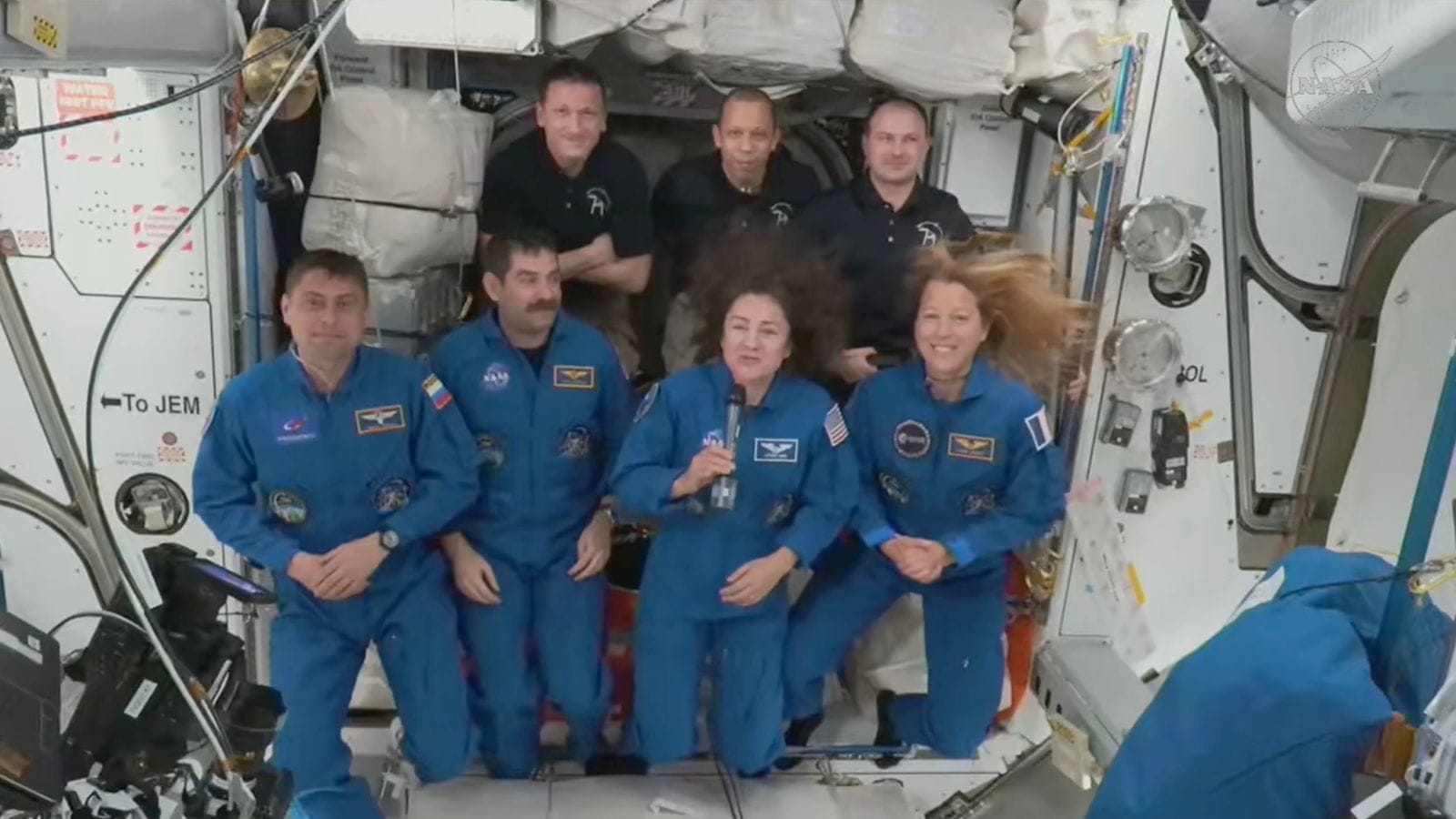
The recent arrival of four new astronauts at the ISS marks a pivotal moment in space exploration, driven by the urgency of human resource management in an environment that has recently faced operational challenges. SpaceX’s successful delivery of NASA’s Jessica Meir and Jack Hathaway, along with France’s Sophie Adenot and Russia’s Andrey Fedyaev, underscores a renewed focus on international collaboration amidst a backdrop of health concerns that led to NASA’s first medical evacuation in more than six decades.
This transition not only signifies a fresh infusion of talent into the ISS but also highlights a shift in market dynamics where operational robustness is paramount. According to a recent report by the Space Industry Association, the demand for advanced aerospace technologies is projected to grow by 15% annually over the next five years, driven by the increasing complexity of missions and the necessity for enhanced crew management systems.
The strategic implications of this crew rotation extend beyond mere operational adjustments. With the new astronauts expected to stay aboard the ISS for eight to nine months, there is a robust opportunity for research and technology development. A recent statement from the European Space Agency emphasized the need for innovative partnerships and investment in health monitoring technologies to ensure astronaut safety and mission success. The interplay of these factors creates a fertile ground for market players to capitalize on emerging opportunities.
Second-Order Effects
While the immediate benefits of the new astronaut team are evident, the second-order effects merit deeper consideration. The operational fragility exposed by the recent medical evacuation has underscored the critical need for robust health protocols and efficient crew management systems. This necessity could lead to increased investments in health monitoring technologies and training solutions designed to mitigate risks associated with long-duration space missions.
Furthermore, the evolving landscape of international partnerships in space exploration could yield a range of collaborative research initiatives. As countries unite under common goals in space, we may see a surge in joint missions, shared resources, and cross-border investments. This collaborative spirit is likely to foster innovation, but it also raises questions about intellectual property and competitive advantage among nations and private entities.
Additionally, the strategic partnerships formed during these missions may influence future bidding processes for contracts related to ISS operations and beyond. Companies that establish themselves as leaders in astronaut health and operational efficiency could find themselves at the forefront of lucrative opportunities, positioning themselves as essential players in the evolving space landscape.
Why this visual matters: This image captures the essence of how new astronauts are set to disrupt space travel, unlocking the ISS’s potential for groundbreaking research and international collaboration.
Data & Competition
The competitive landscape in the aerospace industry is shifting rapidly, with new players emerging as significant contenders. The arrival of the new ISS crew not only impacts operational efficiency but also presents a range of opportunities for various market players. Companies that pivot quickly to enhance astronaut health and technology development stand to gain immensely from the evolving dynamics.
According to a market analysis by Global Aerospace Insights, the sector is expected to see a marked increase in investment, particularly in health monitoring technologies and training solutions for astronauts. The report indicates that early movers in these areas could capitalize on a market projected to reach $1 trillion by 2030, with a focus on international collaboration and research funding initiatives.
However, not all players will benefit equally. Companies that fail to adapt to the rapid changes in operational requirements may find themselves outpaced by competitors who are quicker to innovate. The recent medical evacuation serves as a stark reminder that operational fragility can have far-reaching implications, potentially sidelining organizations that do not prioritize robust health and safety measures.
Strategic Deployment Logic
Frequently Asked Questions
What are the immediate implications of the new astronaut crew at the ISS?
The arrival of the new crew enhances operational capacity, allowing for continued research and collaboration while addressing the recent challenges posed by crew health issues.
How can companies prepare for the evolving landscape of space exploration?
Companies should focus on strengthening health monitoring technologies, establishing strategic partnerships, and investing in astronaut training solutions to adapt to the changing demands of space missions.
What are the potential risks associated with the current astronaut rotation?
Risks include operational fragility due to health concerns, which could impact mission success and the ability to conduct scientific research effectively.
How might international partnerships shape the future of space exploration?
International collaborations can lead to shared resources, joint missions, and innovative research initiatives, but they also raise concerns regarding intellectual property and competitive positioning.
Meet the Analyst
Marcus Vance, Tech Editor – With over a decade of experience in aerospace journalism, Marcus specializes in dissecting the latest trends and innovations shaping the future of space exploration.
Last Updated: March 2026 | HustleBotics Editorial Team