
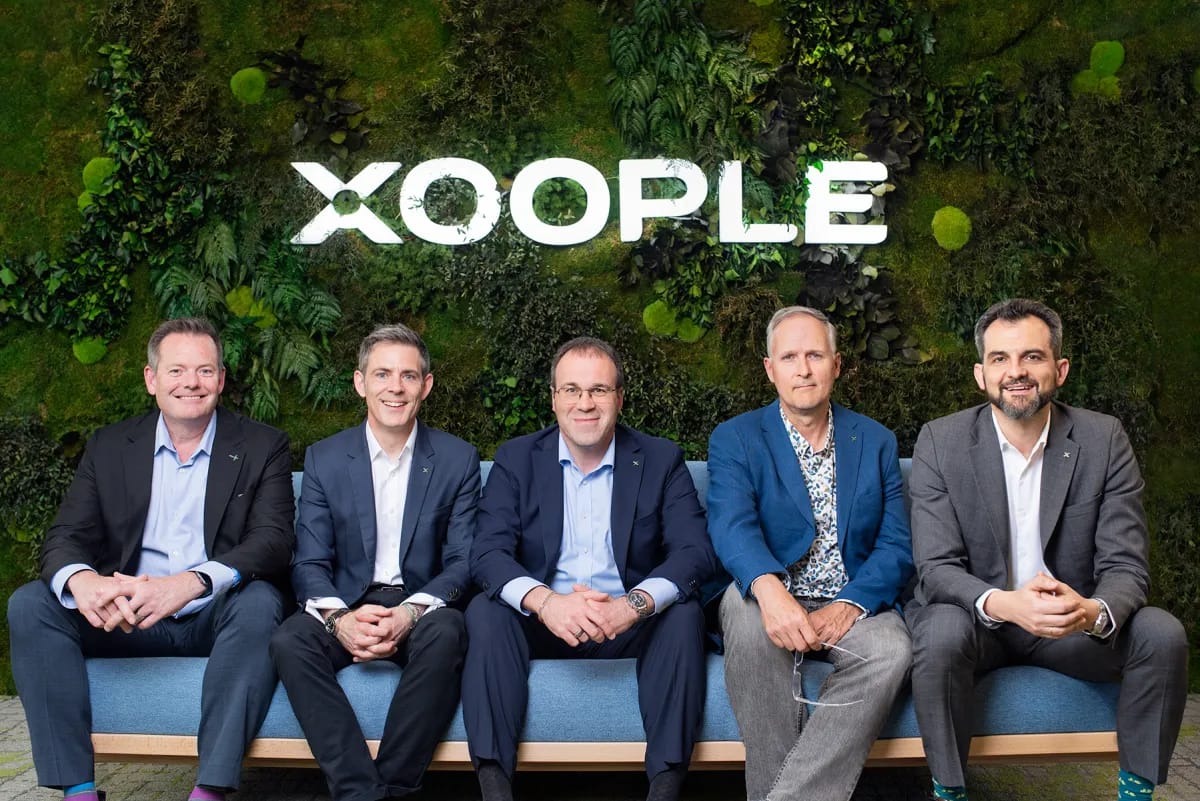
The Emergence of Xoople: Pioneering Ground Truth for Enterprises
In an era where data is the new oil, understanding geographical nuances has never been more crucial for businesses. As automation systems are at the forefront of innovation, Xoople aims to solidify its position as the primary source of precise earth observation data, revolutionizing how enterprises interact with and utilize satellite information.
Xoople, founded in 2019, represents a significant advancement in the realm of satellite-based data collection. The startup‘s journey began with the vision of resolving the lack of reliable geospatial data within the private sector, historically dominated by government contracts. The conventional landscape was marred by fragmented data sources, leading to inefficiencies across various industries. In contrast, Xoople’s mission is to fill this gap by utilizing satellites wielding advanced sensors that promise an unprecedented level of data accuracy for machine learning applications.
📊 MARKET IMPACT ANALYSIS
As Xoople prepares to deploy its satellite constellation, we see a distinct division in the marketplace. The winners are clear: businesses seeking enhanced analytical capabilities, government entities needing refined monitoring systems, and investors benefiting from a company that has already secured a robust $130 million in Series B funding. Conversely, traditional data providers and companies with outdated systems may find themselves facing disruption.
From agricultural firms that can monitor crop health in real-time to municipalities assessing infrastructure, numerous industries stand to gain from Xoople’s offering. For instance, government agencies can utilize the new measurements to gain actionable insights during crises, thus heightening their emergency response capabilities. Additionally, sectors involved in resource management will leverage the advanced data to optimize operations and improve the allocation of resources, resulting in improved margins and reduced costs.
Financial opportunities are abundant as early adopters of Xoople’s technology can carve out a competitive advantage in their respective markets. Companies like agribusinesses using precise satellite imagery or infrastructure firms leveraging real-time data analysis can expect a significant return on investment as predictive models become increasingly sophisticated.
⚔️ COMPETITIVE COMPARISON
What sets Xoople apart in a saturated market? The company faces formidable adversaries like Planet and Airbus, both of which are already established in satellite operations. However, Xoople is differentiating itself through its commitment to data quality and enterprise integration, elements sorely lacking in its competitors.
Benchmarking against rivals, Xoople’s technology promises capabilities “two orders of magnitude better,” a bold statement in a competitive landscape. While others have developed their satellite constellations, Xoople combines government-grade spacecraft data with cloud capabilities, resulting in a more powerful data ecosystem. By making strategic partnerships, such as with L3Harris, the company aims to enhance its sensor technology while also preparing to leverage platforms that businesses already trust, such as Microsoft and Esri.
🛠️ REAL-WORLD USE CASES & MONETIZATION
Xoople’s strategy presents several lucrative pathways for startups and entrepreneurial ventures. Below are three specific workflow ideas that can pave the way for immediate monetization:
- ⚡ **Remote Sensing for Agriculture**: Startup agri-tech companies can use Xoople’s data to offer solutions that improve crop yields, allowing farmers to make informed decisions using hyper-accurate environmental data.
- ⚡ **Disaster Management Platforms**: Development of SaaS tools that utilize Xoople’s data for risk assessment and resource allocation during natural disasters can serve government agencies and NGOs, positioning the startup as an invaluable resource in crisis management.
- ⚡ **Supply Chain Monitoring**: E-commerce ventures can leverage satellite data to track supply chain dynamics in real-time, enhancing delivery precision and inventory management, thus lowering operational costs.
📈 DATA & TRENDS
The demand for earth observation data is expected to skyrocket, with estimated investments in the sector reaching approximately $5 billion by 2026. The compound annual growth rate (CAGR) for satellite data globally is projected to be around 15%, driven by automation systems across industries. An increasing shift toward geospatial AI is evident, with forecasts indicating that the user adoption rate will also surge, with companies looking to integrate satellite data into their everyday operations.
As businesses increasingly recognize the power of precise geospatial intelligence, the landscape is primed for transformation. Early adopters stand to gain enormous competitive advantages, marking a shift in how data is utilized for strategic decision-making.
🧠 HUSTLEBOTICS EDITORIAL INSIGHT
Based on our analysis at HustleBotics, Xoople’s focus on high-quality data collection and embedding solutions into existing enterprise ecosystems signals a pivotal moment in the industry. The integration of satellite data with advanced analytics systems creates a fertile ground for innovation, which can yield profound impacts across various sectors. This proactive move towards enhanced data distribution before actual data availability is a risk, but it also has the potential to reshape the competitive landscape by establishing lasting partnerships with existing tech platforms.
🔮 FUTURE PREDICTIONS
Looking ahead, the next six months will likely see Xoople ramping up its efforts to deploy its satellites and optimize partnerships with firms like L3Harris. By then, pilot projects will serve as a testing ground for various use cases.
In a two-year horizon, we predict Xoople will solidify its market presence and lay the groundwork for what could be considered the ‘Gold Standard’ in geospatial data collection. This could be a transformative pivot point for an entire industry as competition intensifies, and companies increasingly pivot toward automated solutions paired with precise data insights.
❓ FAQ SECTION
What is Xoople’s business model?
Xoople’s business model focuses on providing high-quality satellite data directly integrated into enterprise platforms, allowing companies to leverage the information for better decision-making and service delivery.
How does Xoople collect data?
Xoople collects data using advanced sensors on its satellite constellation, which is designed to provide precise information for various applications, enhanced by partnerships with established tech firms.
Can startups use Xoople’s data for their applications?
Yes, startups can monetize Xoople’s data for various applications, such as agricultural monitoring, disaster management, and supply chain analytics, providing them with actionable insights that can drive efficiency and reduce costs.
What industries will Xoople impact?
Xoople is expected to impact several industries, including agribusiness, government sectors, infrastructure monitoring, and e-commerce, by providing precise geospatial data and insights.
How does Xoople differ from its competitors?
Xoople stands out through its emphasis on data quality, integration into existing platforms, and the intention to develop comprehensive tools for enterprises, unlike many competitors focusing solely on satellite operations.