🌐 CONTEXT & BACKGROUND
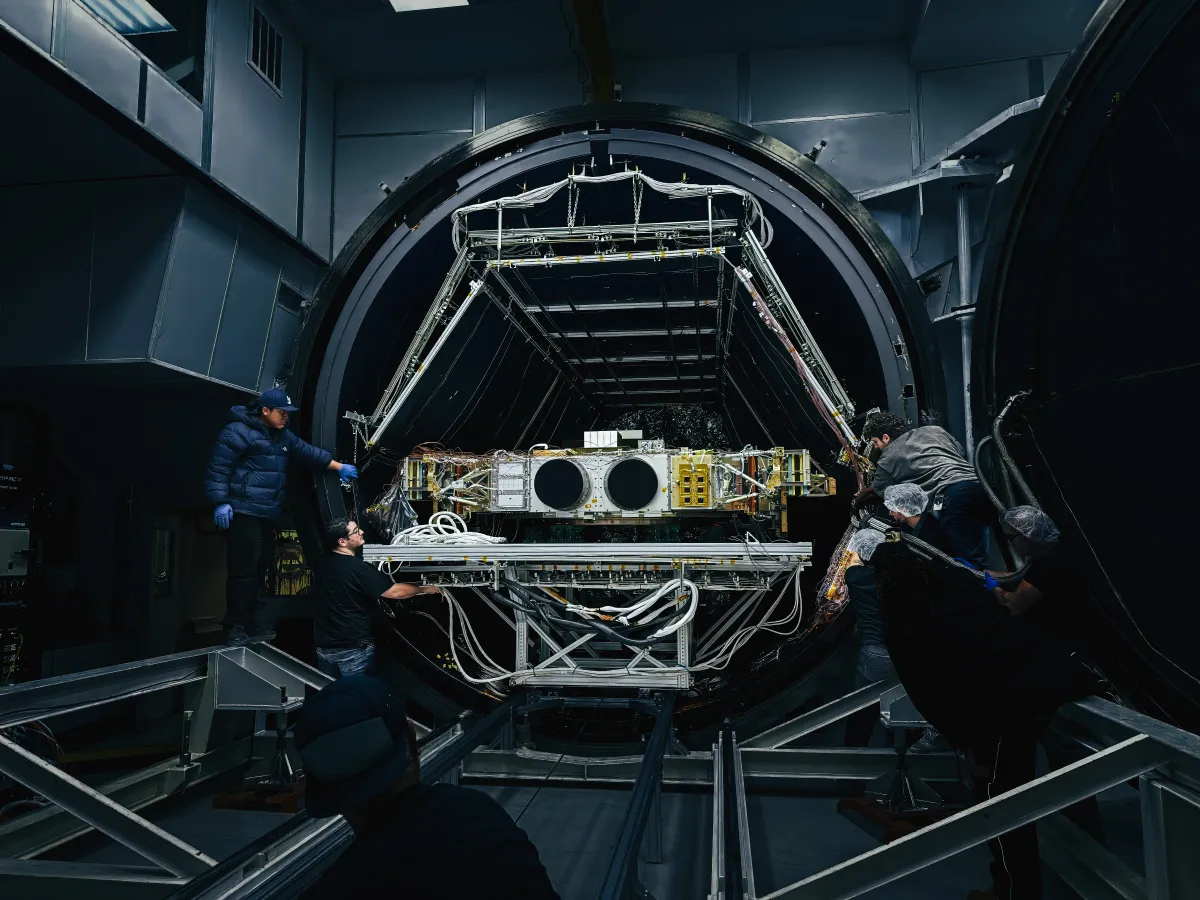
The advent of powerful spacecraft like K2 Space’s upcoming Gravitas satellite represents a transformative moment for entrepreneurs looking to capitalize on the burgeoning space economy. With a staggering potential to enhance data centers in orbit, this technological leap illuminates new pathways for innovative startups and established players alike.
K2 Space, founded in 2022 by the visionary Kunjur brothers, stands at the forefront of this revolution, addressing a critical problem: the insufficient power generation capabilities of existing satellites. Prior to this news, the space market struggled with conventional spacecraft generating a mere handful of kilowatts, a far cry from the robust capabilities required for modern data demands.
📊 MARKET IMPACT ANALYSIS
The launch of Gravitas will invariably delineate the winners and losers in the rapidly evolving space industry. Companies focusing on traditional satellite technologies will find themselves at a competitive disadvantage as Gravitas begins to redefine automation in space operations. Industries such as telecommunications, defense, and cloud computing can anticipate significant disruptions.
As the demand for enhanced satellite capabilities rises, firms leveraging high-power satellites can access lucrative financial opportunities. Equipped with 20 kW, Gravitas allows for advanced processing and communications that can’t be matched by its weaker counterparts. This is expected to lead to improved data throughput and more secure signals, fundamentally transforming the communication networks, especially amid growing interest from defense sectors and commercial entities alike.
⚔️ COMPETITIVE COMPARISON
When contrasted with competitors like ViaSat-3 and the Starlink V3 constellation, K2’s Gravitas boasts significant advantages in efficiency and cost-effectiveness. With a price tag of approximately $15 million, Gravitas emerges as a more attractive option compared to high-powered satellites produced by traditional contractors, which often come with inflated costs yet deliver lower performance metrics.
Moreover, K2 has designed 85% of Gravitas’ components in-house, enabling more agile iterations and responsiveness in meeting market demands. While ViaSat-3 can generate over 25 kW and incurs higher developmental expenses, K2’s strategy emphasizes the need for faster deployment at reduced costs, positioning Gravitas as a game-changer in this competitive landscape.
🛠️ REAL-WORLD USE CASES & MONETIZATION
To leverage the capabilities unlocked by Gravitas, here are three actionable workflow ideas for startups and solo entrepreneurs seeking immediate monetization opportunities:
- ⚡ **Satellite as a Service (SaaS):** Offer businesses a subscription model where they can access data and services transmitted via Gravitas, enhancing their capabilities in various sectors, from agriculture to disaster management.
- ⚡ **Advanced Communication Networks:** Startups could collaborate with K2 to create next-generation communication platforms using Gravitas’ power to enhance speed and reliability, particularly for pressurized environments like urban cities.
- ⚡ **Embedded Computing Solutions:** Use Gravitas’ powerful processing units to deploy IoT applications in real-time monitoring systems for various industries, lowering the entry barrier for tech startups.
📈 DATA & TRENDS
Investments in the space industry are projected to soar, reaching upwards of $1 trillion by 2030 with a compound annual growth rate (CAGR) of around 10% in satellite technology alone. User adoption of novel satellite services is also set to gain traction, with figures expected to surpass 100 million users by 2026.
The global demand for high-powered data centers in orbit is anticipated to accelerate, driven not just by media consumption but also by strategic defense initiatives, thus creating substantial market growth prospects for startups in this realm. The increasing significance of space technology ensures a fertile ground for entrepreneurial endeavors.
🧠 HUSTLEBOTICS EDITORIAL INSIGHT
Based on our analysis at HustleBotics, the launch of Gravitas is more than just a technologically superior spacecraft; it represents a pivotal shift towards higher power dynamics in space operations that are long overdue. By enabling vital services from orbit, K2 Space is not only addressing existing challenges but is also setting the stage for groundbreaking innovations that will define the next decade of the space economy.
🔮 FUTURE PREDICTIONS
Looking forward, within six months, we can expect K2’s first deployment to either validate or challenge existing power dynamics in space. If successful, further investments into satellite technology will likely intensify. In two years, as Starship makes its expected entry into the market, K2 Space may already have a solidified position, ready to capitalize on lower launch costs and increased demand for sophisticated satellite services.
This moment may very well be seen as a pivot point in the industry—a confirmation that cutting-edge technology will reshape how we view data in orbit, moving beyond mere observation towards intricate operations and services capable of supporting increasingly demanding applications.
❓ FAQ SECTION (SEO Booster)
What is K2 Space’s Gravitas satellite?
K2 Space’s Gravitas is a cutting-edge satellite designed to generate high power (20 kW) for various applications, fundamentally changing how data centers are operated in orbit.
How does Gravitas differ from traditional satellites?
Unlike conventional satellites that typically produce limited energy, Gravitas offers significantly higher power outputs allowing for advanced capabilities, strong signals, and operation of sophisticated payloads.
Can I invest in K2 Space or its satellite technology?
As a private entity, investment opportunities may vary, but interested parties should look for potential funding rounds or partnerships as K2 expands its operations.
What industries will be most affected by K2 Space’s advancements?
The telecommunications, defense, and cloud computing industries stand to benefit immensely from the high-power capabilities of Gravitas, reimagining how data is transmitted and processed.
How can startups leverage Gravitas technology?
Startups can utilize Gravitas through satellite-as-a-service models, enhanced communication networks, and embedded computing solutions, capitalizing on its robust power to drive innovation.