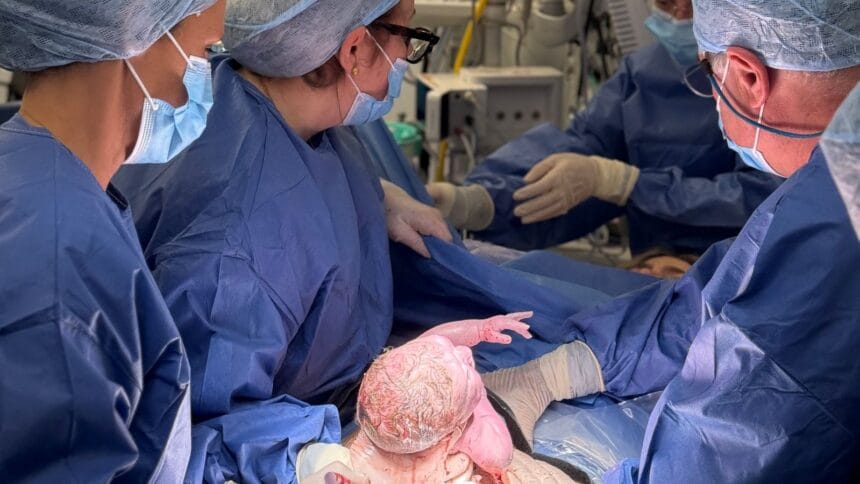
Revolutionizing Reproductive Health: The Womb Transplant Breakthrough
The recent birth of Hugo Powell, the first baby in Britain born via a womb transplant from a deceased donor, marks a pivotal moment in reproductive healthcare. This achievement, celebrated at Queen Charlotte’s and Chelsea Hospital in London, underscores the potential for womb transplants to transform the landscape of reproductive medicine. According to a report by the World Health Organization, advancements like these could address uterine factor infertility affecting millions globally, creating a burgeoning market for innovative reproductive solutions.
Industry experts from the Reproductive Health Council have indicated that the successful execution of such complex medical procedures opens doors for new investments and technological developments. This sentiment is echoed by a White Paper from the European Society of Human Reproduction and Embryology, which emphasizes the importance of fostering a robust ecosystem around reproductive technologies to meet growing demand.
Second-Order Effects: What Most People Miss
While the immediate implications of womb transplants are evident, the second-order effects are less discussed but equally significant. The procedure not only revolutionizes how we perceive reproductive health but also shifts societal norms and expectations. As womb transplants become more accessible, there may be a shift in the dynamics of family planning and fertility treatments. This could lead to increased demand for personalized medical services and a re-evaluation of traditional reproductive roles.
Moreover, the success of womb transplants could catalyze advancements in related fields, such as regenerative medicine and organ transplantation. The potential to apply the knowledge gained from womb transplants to other organ transplants could spark a new wave of medical innovations, further expanding the market opportunities in healthcare.
Data & Competition: Winners and Losers in the Market
The introduction of womb transplants as a viable medical procedure positions certain players as frontrunners in the reproductive healthcare market. Organizations like Womb Transplant UK, which spearhead these initiatives, stand to benefit significantly from early adoption and expertise in this niche. These entities could leverage their pioneering status to attract investment and forge strategic partnerships with medical institutions and technology firms.
Conversely, stakeholders who are slow to adapt may find themselves at a competitive disadvantage. The rapid evolution of reproductive technologies necessitates agility and foresight. Companies that fail to invest in research and development or ignore the growing demand for advanced fertility solutions risk losing market share to more proactive competitors.
Why this visual matters: This image captures the essence of the Womb Transplant Market, highlighting the Reproductive Health Innovation that is set to transform healthcare. This visual representation strengthens the semantic context by illustrating the future potential of these medical advancements.
Strategic Deployment Logic
Frequently Asked Questions
What is a womb transplant?
A womb transplant is a surgical procedure where a uterus is transplanted into a woman with uterine factor infertility, enabling her to potentially carry a pregnancy.
How does one become a womb donor?
Potential womb donors undergo comprehensive counseling and consent processes, whether they are living or deceased donors, to ensure informed decision-making.
Is it possible to have a baby after a womb transplant?
Yes, following a successful womb transplant and subsequent fertility treatments, patients may conceive through in vitro fertilization (IVF).
What are the ethical implications of womb transplants for profit?
Introducing profit motives into womb transplantation raises ethical concerns, including the commodification of the human body, access disparities, and potential exploitation of vulnerable individuals.
Meet the Analyst
Marcus Vance, Tech Editor
Marcus is a seasoned analyst with a decade of experience in technology and healthcare innovations. He specializes in identifying market trends and creating strategic insights for industry leaders.
Last Updated: March 2026 | HustleBotics Editorial Team