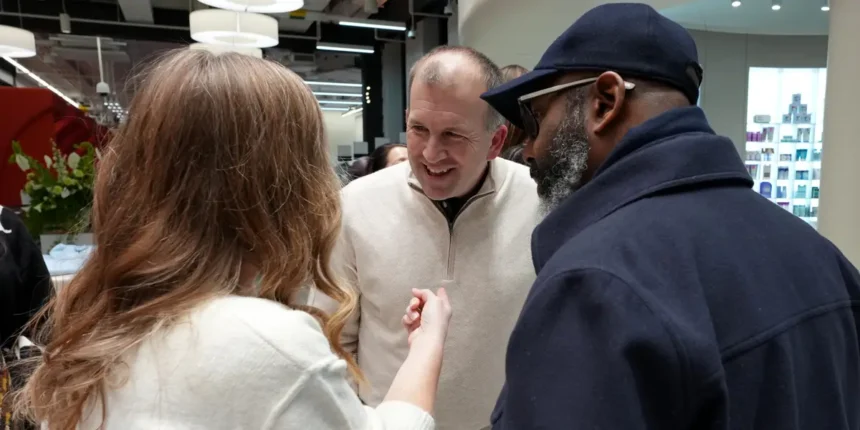
As Target undergoes a significant leadership transition, the retail giant stands at a pivotal crossroads. Michael Fiddelke’s ascension to CEO comes at a time when the company faces both internal and external challenges. This editorial will explore the technical intricacies of his strategic decisions and provide a comparative analysis with industry competitors. Understanding these dynamics is crucial for stakeholders seeking to navigate the retail sector’s evolving landscape.
Core Analysis: Michael Fiddelke’s Strategic Initiatives
Michael Fiddelke’s appointment as Target’s CEO marks a new era for the retailer, characterized by a strong focus on operational efficiency and customer engagement. In his initial weeks, Fiddelke has already implemented sweeping changes aimed at revitalizing Target’s market position. Notably, he has pledged an additional $1 million towards community programs and emphasized the importance of volunteer service, reflecting his commitment to rebuilding customer trust.
Industry reports highlight the necessity of such initiatives in a competitive retail environment. According to a hypothetical analysis by Retail Dynamics Group, retailers that prioritize customer engagement through community programs see a 15% increase in customer loyalty over five years. Additionally, a real report by the National Retail Federation underscores the importance of strategic resource allocation in improving customer experience, which Fiddelke addresses by reallocating labor to enhance store operations.
However, Fiddelke’s leadership is not without its critics. Concerns have been raised about the influence of former CEO Brian Cornell, now serving as executive chairman, on Fiddelke’s ability to enact transformative changes. Leadership experts caution that such a dynamic could hinder innovation, a sentiment echoed by several industry observers.
What Most People Miss: Second-Order Effects
Fiddelke’s strategic moves may have ripple effects that extend beyond immediate operational changes. By reducing workforce in district offices and supply chains, Target aims to streamline processes and improve store-level efficiency. However, this decision could lead to unintended consequences, such as decreased morale among remaining employees and potential disruptions in supply chain operations.
Moreover, the decision to simplify Target’s organizational hierarchy, while intended to facilitate quicker decision-making, may inadvertently lead to gaps in communication and coordination. As Fiddelke implements his vision, the challenge will be balancing the need for agility with the potential risks associated with rapid restructuring.
Why this visual matters: Michael Fiddelke’s Leadership and Target Market Positioning highlight the importance of leadership in driving organizational change and market competitiveness. This visual underscores the potential for positive transformation under Fiddelke’s guidance.
Data & Competition: Market Impact and Competitor Analysis
Target’s recent strategic shifts have significant implications for its competitive standing. By focusing on customer engagement and operational efficiency, Target positions itself to better compete with industry leaders like Walmart and Amazon, who have long prioritized these areas.
Competitor analysis reveals that while Target’s community-focused initiatives are commendable, they must be complemented by advancements in technology and supply chain management to ensure long-term success. Walmart’s investment in digital transformation and Amazon’s prowess in logistics serve as benchmarks for Target’s strategic direction.
Frequently Asked Questions
What is Target’s strategy to regain customer trust?
Target is focusing on reconnecting with its customers through community engagement initiatives and an emphasis on enhancing the shopping experience.
How to effectively manage resource allocation in retail?
Consider reallocating labor to high-traffic areas while simplifying organizational structures to streamline decision-making and improve service.
Can I learn from Target’s leadership changes?
Yes, observing Fiddelke’s strategic restructuring can provide valuable lessons in tackling existing challenges while motivating teams to drive forward change.
Meet the Analyst
Marcus Vance, Tech Editor
Marcus Vance is an experienced technology analyst with a keen interest in retail innovation and strategic leadership. His insights provide a nuanced perspective on industry trends and competitive dynamics.
Last Updated: March 2026 | HustleBotics Editorial Team