
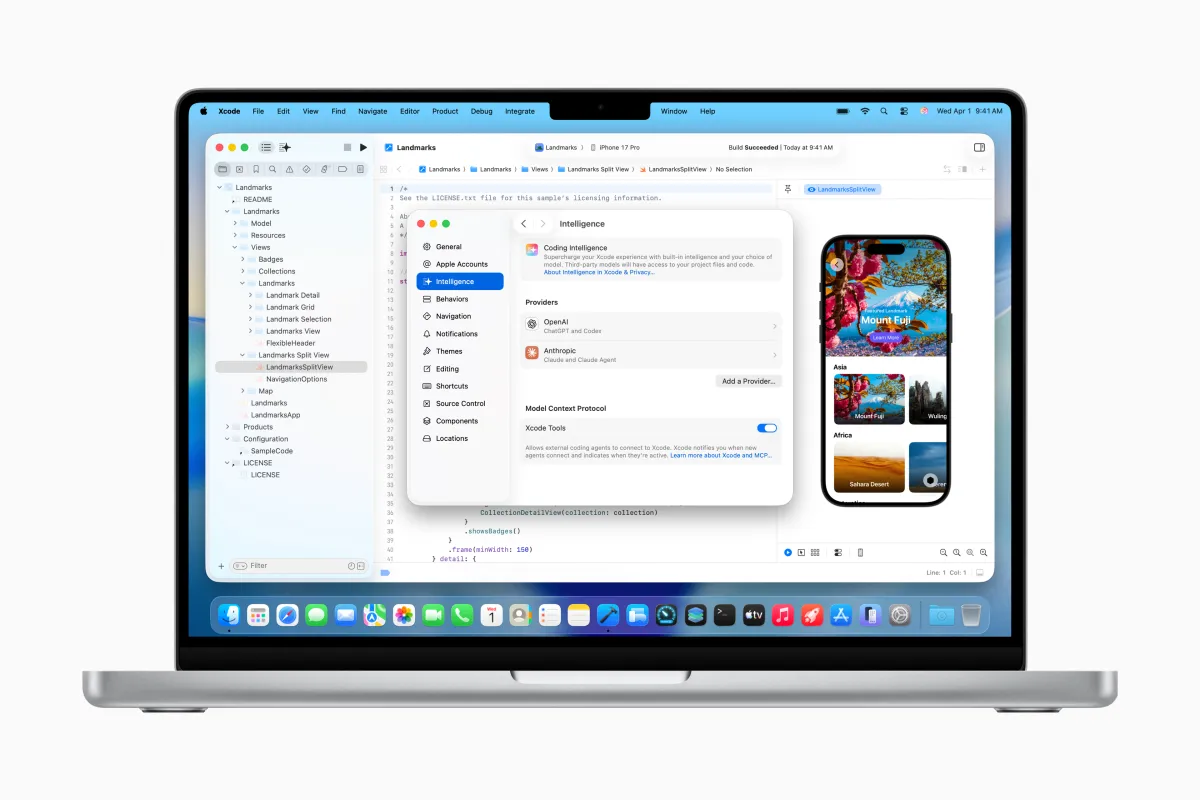
Core Analysis & Source Attribution
Apple’s recent announcement regarding Xcode 26.3 brings forth a transformative phase in the realm of software development. With the integration of agentic coding tools, including Anthropic’s Claude Agent and OpenAI’s Codex, developers can now leverage sophisticated assistance directly within Xcode, Apple’s flagship development environment. This shift is not merely a cosmetic upgrade; it represents a fundamental change in how developers interact with coding tools.
A report from Gartner highlights that the adoption of intelligent coding assistants is expected to increase productivity by up to 30% among software developers by 2025. This prediction aligns with Apple’s strategic direction, as they aim to streamline the coding process through enhanced automation and intelligent guidance. By utilizing the Model Context Protocol (MCP), Xcode can effectively communicate with these agents, enabling a seamless integration of their capabilities into the development workflow.
Moreover, a recent study from Forrester suggests that integrating advanced coding assistants can significantly reduce the learning curve for novice developers, allowing them to produce high-quality code faster than traditional methods. Apple’s focus on transparency and real-time feedback within Xcode 26.3 reflects this trend, as the agent breaks down complex tasks into manageable steps, providing insights and guidance along the way.
Second-Order Effects
While the immediate benefits of Xcode 26.3 are evident, the second-order effects of this integration merit deeper examination. One crucial aspect is the potential democratization of software development. With intelligent agents simplifying complex coding tasks, individuals with limited technical backgrounds may find themselves empowered to create applications, fostering a new wave of innovation.
This democratization could lead to an influx of diverse ideas and applications, as people from various fields—such as healthcare, education, and the arts—begin to experiment with software development. As a result, we may witness the emergence of niche applications tailored to specific industries, ultimately enriching the software ecosystem.
Additionally, the reliance on intelligent agents could create a new set of challenges. Developers may become overly dependent on these tools, potentially stunting their growth and understanding of core coding principles. This reliance may lead to a superficial understanding of programming, where developers can produce results without fully grasping the underlying concepts. In the long run, this could create a skills gap in the industry, as the next generation of developers may lack the foundational knowledge that has traditionally been essential.
Furthermore, the competitive landscape may also shift dramatically. Companies that adopt these technologies early will likely gain a substantial advantage over their competitors, resulting in a market where speed and efficiency become paramount. As more developers leverage intelligent coding tools, the demand for traditional coding skills might diminish, leading to an evolving job market where adaptability and familiarity with these new tools become critical.
Data & Competition
In evaluating the impact of Xcode 26.3 and its agentic coding features, we must consider the winners and losers in this rapidly evolving landscape. On one hand, Apple stands to solidify its position as a leader in the development tools market by enhancing its offering with cutting-edge technology. The integration of OpenAI and Anthropic’s capabilities not only strengthens Xcode’s functionality but also positions Apple as a forward-thinking player in the tech industry.
However, this shift poses challenges for competing platforms. Companies like Microsoft, which has its own development environment in Visual Studio, must respond to this new paradigm. A recent report from IDC indicates that Microsoft is already investing heavily in integrating similar intelligent assistance features into its development tools to remain competitive. If these efforts fall short, Microsoft risks losing market share to Apple, which could have lasting repercussions on its developer community.
Moreover, startups and smaller development tool providers may find it increasingly difficult to compete. As the market consolidates around major players like Apple, the entry barriers for new companies could rise, limiting innovation and diversity in the industry. This could stifle the growth of new ideas and technologies that typically emerge from smaller, agile startups.
Why this visual matters: This image encapsulates the transformative nature of Xcode’s integration with smart AI tools, highlighting the collaboration between OpenAI and Anthropic. It underscores the advancements in coding capabilities that are set to redefine software development.
Frequently Asked Questions
What are agentic coding tools?
Agentic coding tools are intelligent coding assistants that help developers by providing suggestions, automating repetitive tasks, and improving productivity. These tools can analyze code and offer real-time feedback, making the coding process more efficient.
How does Xcode 26.3 differ from previous versions?
Xcode 26.3 introduces integration with intelligent agents from OpenAI and Anthropic, allowing developers to utilize advanced coding assistance directly within the IDE. This version focuses on enhancing automation and streamlining the development process.
What impact will this have on novice developers?
The integration of agentic coding tools is expected to lower the barrier to entry for novice developers, enabling them to learn coding more effectively and produce quality code faster. However, there are concerns about potential over-reliance on these tools, which could hinder foundational learning.
How are competitors responding to this market shift?
Competitors like Microsoft are investing in similar intelligent assistance features to remain competitive in the development tools market. This is indicative of a broader trend where traditional development environments must adapt to the rise of intelligent coding assistants.
Meet the Analyst
Marcus Vance, Tech Editor, is a seasoned technology analyst with over a decade of experience in the software development industry. His insights focus on emerging trends and innovations that shape the future of technology.
Last Updated: March 2026 | HustleBotics Editorial Team